
What if the real question is not whether to choose AI or humans — but which conversations deserve a heartbeat and which ones deserve perfect consistency?
The $14.7 billion contact center industry is being reshaped right now. Companies making the right allocation decision are seeing 300% more qualified meetings and 22% higher payment recovery rates. The rest are still trapped on the hiring treadmill.
|
Updated January 2025
|
Trusted by 10,000+ business leaders
|
Sources: Bureau of Labor Statistics, FCC, NIST
What You Will Gain From This Analysis:
Discover the hidden 74% cost increase most CFOs miss when calculating agent expenses
Learn the exact framework for deciding which calls AI should own versus humans
Understand the compliance risks of AI voice that could expose your organization
See real performance benchmarks comparing traditional, AI, and hybrid models
Table of Contents Click to expand
- The Math That Collapses Toward AI
- What an AI Voice Agent Actually Is
- The Metric That Actually Matters
- Your True Agent Cost Revealed
- The Disclosure Trap and Legal Risks
- The Real Disease: Misallocation
- The Hybrid Model Done Right
- The 3 AM Revenue Event
- Decision Framework With Teeth
- The Future: AI Making Humans Dangerous
Your Call Center Is Not Failing Because of Bad Agents — It Is Failing Because of Math
The average customer service representative in the United States costs employers $22.53 per hour in wages alone. Add benefits, and that number climbs to $39.55 per hour according to the Bureau of Labor Statistics — a fully loaded cost that most executives dramatically underestimate when budgeting their support operations.
Now multiply that by 200 agents across two shifts. Then add the 30–45% annual turnover rate that plagues traditional contact centers. Then factor in the 6–8 weeks of onboarding before a new hire touches a live call.
The math does not just lean toward AI. It collapses in its direction.
But this analysis is not a funeral for the human agent. The AI voice agent vs call center debate is more nuanced than the headlines suggest — and most companies are getting the implementation wrong. They are choosing sides when they should be choosing use cases. They are comparing costs when they should be comparing outcomes. And they are evaluating technology in a vacuum when the real question is: which interactions should a machine own, and which ones still demand a human heartbeat?
Quick Insight
Companies that frame this as a technology decision instead of a resource allocation decision are already behind. Discover how AI-powered conversational tools are redefining customer interactions — not by replacing humans, but by making every second of human attention count.
The Shift Nobody Measured Until It Was Too Late
Traditional call centers were designed for a world where customers had one channel: the phone. They called, they waited, they spoke to a person. The entire infrastructure — workforce management, IVR trees, hold queues — was built around managing scarcity. Scarcity of agents. Scarcity of time. Scarcity of patience.
That model held for decades. Then customer expectations shifted from “answer my call” to “answer my call in three seconds, at midnight, in Portuguese.” The old infrastructure did not evolve. It just got more expensive to maintain. A GAO report on federal contact centers documented what most enterprises already felt — inconsistent speed-of-answer metrics, rising abandonment rates, and oversight frameworks that could not keep pace with demand.
What an AI Voice Agent Actually Is — And What It Is Not
Strip away the marketing fog. An AI voice agent is a software system that conducts real-time phone conversations using automatic speech recognition, natural language processing, and text-to-speech synthesis. It listens, interprets intent, executes actions — booking appointments, updating records, answering policy questions — and does it in a voice that sounds indistinguishable from your best Tuesday-morning agent.
This is not a chatbot with a microphone. It is a full-stack conversational engine that plugs into your CRM, pulls customer history in milliseconds, and adapts its response based on context — not a decision tree.
Proven Result
A SaaS company with 12 SDRs replaced 10 of them with NewVoices agents and booked 300% more qualified meetings in a single quarter. The two remaining human reps handled only enterprise accounts above $100K.
The Human Agent: Still Irreplaceable, Just Misallocated
Human call center representatives bring something no algorithm replicates — genuine emotional resonance during high-stakes moments. A customer whose medical claim was denied does not want efficiency. They want to feel heard. A business buyer evaluating a $500K contract does not want speed. They want judgment.
The Bureau of Labor Statistics describes the role as requiring active listening, problem-solving, and conflict resolution — skills that take months of on-the-job training to develop. The tragedy of most call centers is not that they employ humans. It is that they waste humans on password resets and order-status checks while complex, revenue-critical conversations go under-resourced.
The Metric That Matters Is Not Speed — It Is What Happens After the First Five Seconds
Every vendor in the AI voice space talks about speed. Faster response times. Lower average handle times. Reduced hold durations. And those numbers are real — but they are also incomplete.
Speed without resolution is just efficient failure.
The metric that separates high-performing service operations from expensive ones is what happens after initial contact. Does the issue get resolved? Does the customer call back? Does the interaction generate revenue or just close a ticket? Montgomery County’s operational analysis of call center performance found that first-call resolution — not speed of answer — was the strongest predictor of customer satisfaction and cost efficiency.
Did You Know?
NewVoices handles 90% of Tier-1 tickets without human intervention, and every interaction follows the same compliance framework — at 2 AM on a holiday or 10 AM on a Tuesday.
Your Fully Loaded Agent Cost Is 74% Higher Than the Number on Your Budget Sheet
When finance teams evaluate the AI voice agent vs call center decision, they start with salary. That is the wrong starting point.
The real cost of a human agent includes wages, benefits (health insurance, retirement contributions, paid leave), payroll taxes, training (initial and ongoing), software licenses per seat, real estate per workstation, management overhead, and the cost of turnover — recruiting, interviewing, onboarding a replacement every 8–14 months. BLS data on employer compensation costs shows that benefits alone add 30–40% on top of wages for service-sector employees.
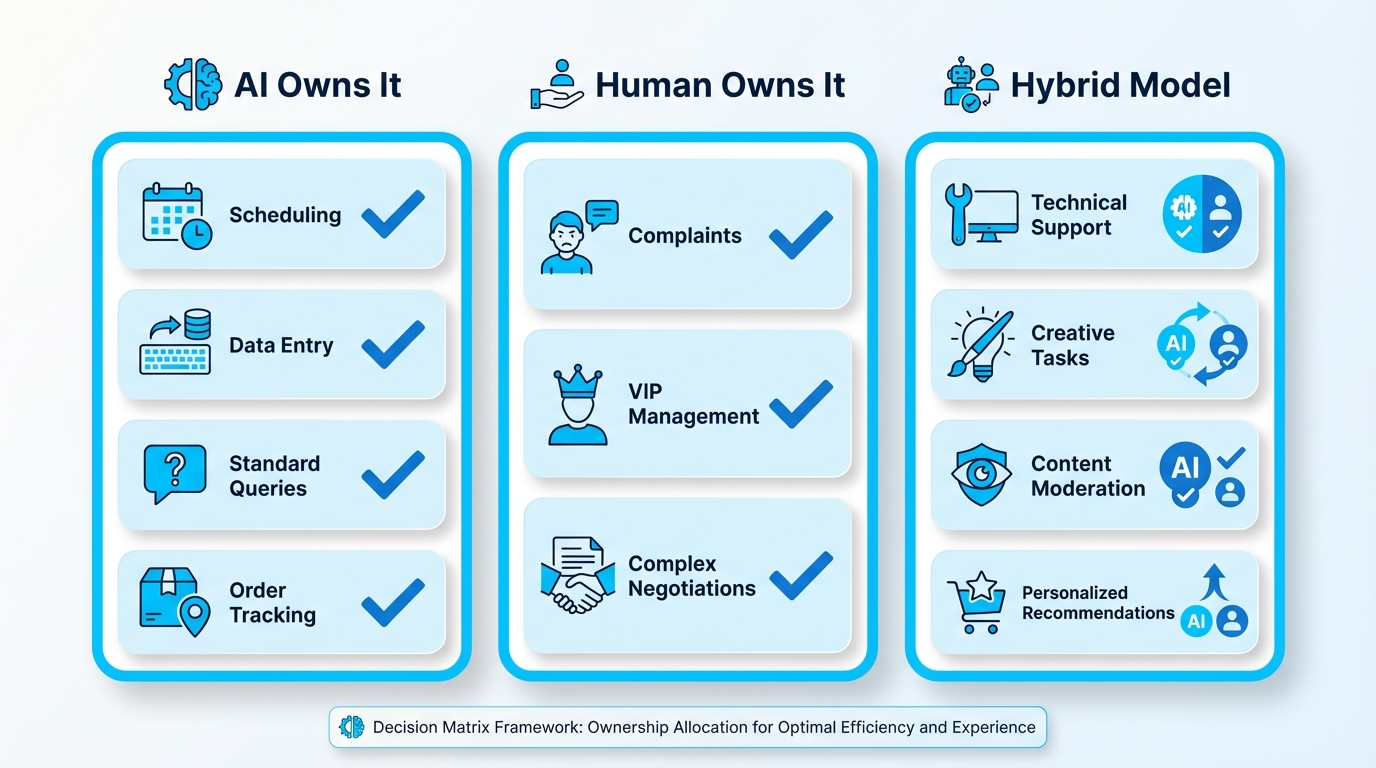
The hidden cost factors that transform a $42,000 budget line into $73,100 in actual expenses
Real-World Impact
A mid-sized insurance carrier reduced headcount by 40 agents and increased payment recovery rates by 22% within 90 days of deploying NewVoices for inbound policy inquiries.
The Hidden ROI Line Nobody Puts in the Proposal
Cost savings get approvals. Revenue generation gets promotions. The financial case for AI voice agents does not stop at “we spend less on agents.” It extends to calls that never happened before — the 9:47 PM lead callback, the Saturday renewal reminder, the multilingual outbound campaign that would have required a separate vendor contract. While your competitors’ support centers close at 6 PM, a NewVoices agent books a $50K renewal at midnight in German and syncs the outcome directly to Salesforce before the account executive’s alarm clock goes off.
The Disclosure Trap: Why Sounding Human Creates Legal Risk You Have Not Priced In
Here is the uncomfortable paradox at the center of modern AI voice deployment. The better the technology gets, the greater the regulatory exposure.
When an AI voice agent sounds exactly like a human — and NewVoices agents do — the question shifts from “can it fool the customer?” to “should it?” The FCC’s 2024 declaratory ruling on AI-generated voice calls made the regulatory trajectory clear: artificial and prerecorded voices in telephone calls face increasing disclosure requirements. The FTC has separately flagged AI-enabled voice cloning as a consumer protection priority.
Critical Compliance Note
Companies that deploy AI voice agents without a disclosure framework are not just taking a brand risk. They are taking a compliance risk in an environment where the rules are tightening quarterly. NewVoices builds disclosure protocols directly into the agent design — configurable by jurisdiction, by use case, by industry vertical. SOC 2 Type II, GDPR, and HIPAA compliance are the foundation, not afterthoughts.
Where Voice AI Still Breaks Down
No voice agent — including the best on the market — handles every scenario flawlessly. NIST’s speech intelligibility research demonstrates that background noise, accented speech, and degraded audio quality still reduce ASR accuracy in real-world conditions. A caller in a busy warehouse, a patient on a windy street, a prospect in a car with the windows down — these environments introduce error rates that controlled demos never reveal.
Latency matters too. NIST’s mouth-to-ear latency measurement framework quantifies what every caller instinctively feels — a 400-millisecond delay creates conversational awkwardness. A 700-millisecond delay triggers distrust. The best AI voice platforms keep latency under 200 milliseconds. The mediocre ones do not even measure it.
The Call Center’s Real Disease Is Not Inefficiency — It Is Misallocation
Before AI voice agents: your top-performing agent — the one who can de-escalate a furious customer, upsell a renewal, and navigate a three-system workflow simultaneously — spends 60% of their day answering “what is my account balance?” and “when does my subscription renew?”
With AI voice agents: that same top performer handles only the 10% of calls that require judgment, empathy, and creative problem-solving. Their close rate doubles. Their satisfaction scores rise. Their burnout drops. They stay 2.3 years instead of 11 months.
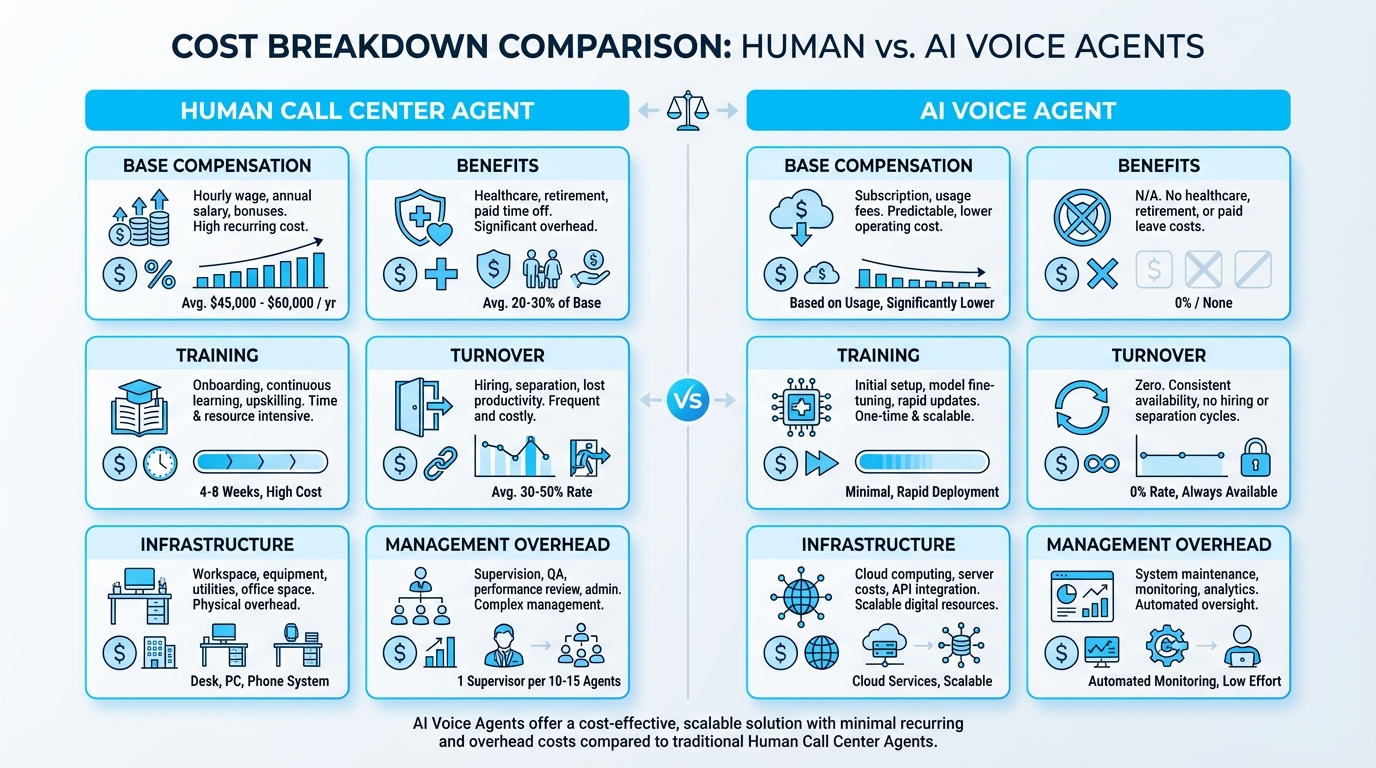
The hybrid model that turns your support operation from a cost center into a revenue engine
Healthcare Success Story
A regional healthcare network deployed NewVoices for 68% of inbound volume (scheduling, refills, verification), reassigned 34 agents to care coordination, and saw patient satisfaction increase by 19 points while agent turnover dropped from 41% to 14%.
What Airlines Can Teach You About the Hybrid Model — And Why Most Companies Build It Backward
The airline industry solved a similar problem two decades ago. Self-service kiosks did not replace gate agents. They absorbed the 80% of interactions — boarding passes, seat changes, baggage tags — that did not require a human decision. Gate agents stopped scanning documents and started solving problems. The customer experience improved. The cost per passenger dropped. Both happened simultaneously.
The same principle applies to the AI voice agent vs call center decision, but most companies implement it backward. They deploy AI as a filter — a front door that tries to contain customers before they “escape” to a human. Customers feel it. They press zero. They say “representative” seventeen times. The AI becomes a barrier, not a solution.
The Right Architecture
Treat AI as a parallel workforce, not a gatekeeper. NewVoices agents handle complete interactions end-to-end for the use cases they are designed to own. When a call requires human judgment, the AI transfers with full context attached — the human sees history, assessment, and recommended action before saying hello.
Designing Escalation That Does Not Feel Like Escalation
The moment a customer hears “let me transfer you to a specialist,” they brace for a reset. They expect to repeat everything. They expect to wait. That expectation is earned — most systems deliver exactly that experience. The hybrid model only works when the handoff is invisible to the customer.
That means CRM-native integration — Salesforce, HubSpot, Zendesk — where the AI writes a structured summary into the customer record before the human picks up. NewVoices does this in under two seconds. The human agent reads context, not a blank screen. The customer never repeats a word. Explore the benefits of integrating AI into your existing support infrastructure — the handoff is the product, not an afterthought.
Want to Hear What Seamless AI Sounds Like?
Experience the voice quality that makes customers forget they are talking to AI.
No forms. No waiting. Instant demo.
The 3 AM Revenue Event Your Current System Misses Every Single Night
A $200K lead fills out your demo form at 9:47 PM on a Thursday. Your SDR team left three hours ago. Your auto-responder sends a “we will get back to you within 24 business hours” email. By Friday morning, that lead has already booked a demo with your competitor — the one whose AI agent called them back in four seconds, qualified them, and scheduled a meeting on the account executive’s calendar.
This is not a hypothetical. It is the revenue leak that compounds every night, every weekend, every holiday across every time zone your customers occupy.
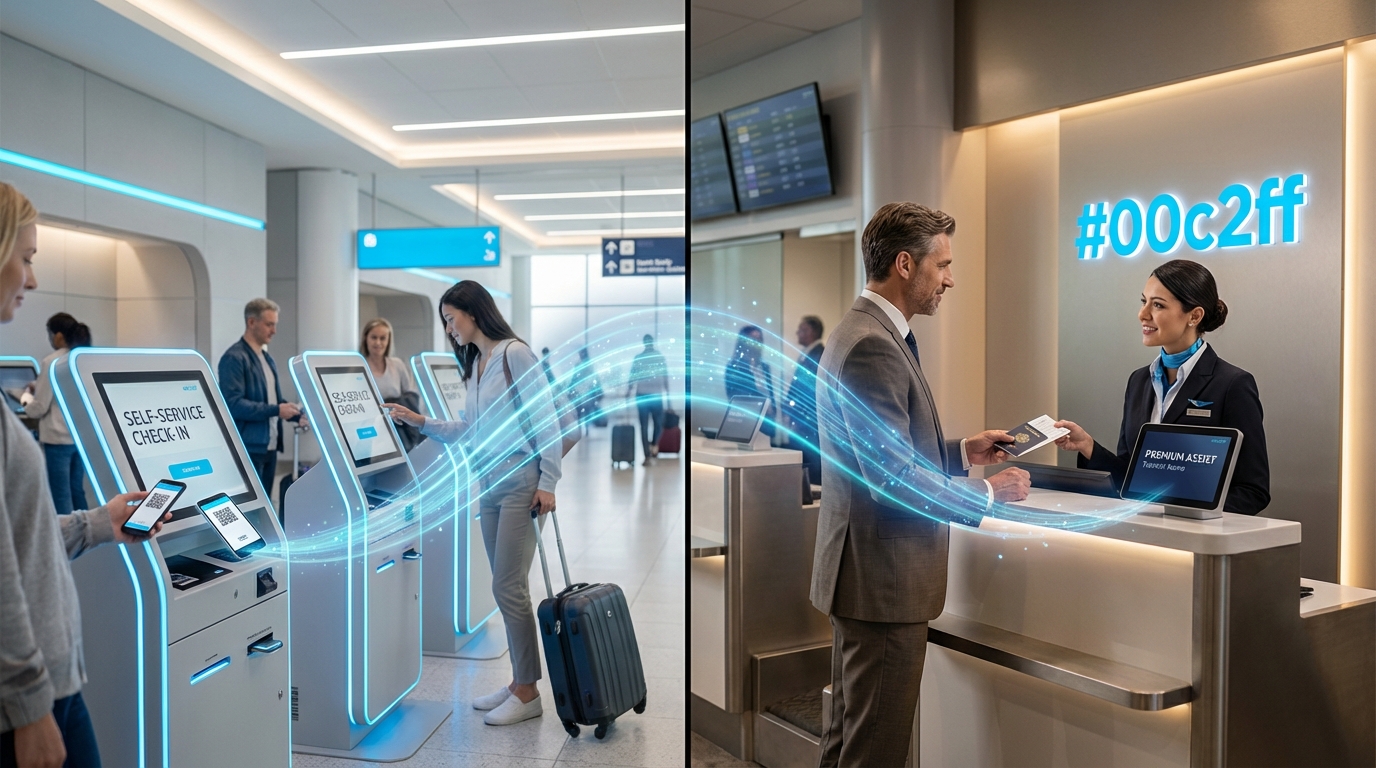
The conversion difference between instant response and standard business-hours follow-up
Breakthrough Result
A B2B fintech company measured the impact over 90 days: leads contacted within 5 seconds converted at 3.8x the rate of leads contacted within 5 minutes. The difference between “fast” and “instant” was $1.2 million in pipeline.
Making the Decision: A Framework That Is Not Just “It Depends”
Every article on this topic ends with “the right choice depends on your business.” That is true and useless in equal measure. Here is a decision framework with actual teeth.
The pattern is clear. AI owns volume and consistency. Humans own complexity and emotion. The hybrid model owns the middle — interactions that start simple but can escalate unpredictably.
The Future Is Not AI or Humans — It Is AI Making Humans Dangerous
The AI voice agent vs call center debate frames the wrong competition. AI and human agents are not opponents. They are force multipliers — but only when deployed against the right problems.
The companies winning this transition are not the ones that automated everything. They are the ones that automated the right 70% and concentrated their human talent on the 30% that drives revenue, retention, and reputation. They measure success not by “calls handled” but by “revenue per interaction” and “customer lifetime value change.”
NewVoices sits at the center of that architecture — not as a replacement for your team, but as the infrastructure that makes every human interaction on your team worth five times more. Your agents stop being ticket-closers. They become revenue operators. Your support center stops being a cost center. It becomes a growth engine.
The Competitive Moat
Your competitors will deploy AI voice agents. That is inevitable. The differentiation is not whether you use the technology — it is how precisely you allocate it. Those design decisions — built into the NewVoices Agent Studio without a single line of code — are where the actual competitive advantage lives.
Frequently Asked Questions Click to expand
How quickly can AI voice agents be deployed?
NewVoices agents can be configured and deployed in days, not months. The no-code Agent Studio allows business teams to build and modify agents without engineering resources.
What happens when the AI cannot handle a call?
NewVoices transfers calls with full context attached. Human agents see customer history, the AI assessment, and recommended actions before they say hello — no repetition required from the customer.
Is AI voice compliant with HIPAA and other regulations?
NewVoices is built with SOC 2 Type II, GDPR, and HIPAA compliance as foundational architecture. Disclosure protocols are configurable by jurisdiction and industry.
How does pricing compare to human agents?
AI voice agents typically cost $8,000–$18,000 annually versus $65,500–$89,000 for a fully loaded human agent — a 75-90% reduction in cost per interaction.
What languages does NewVoices support?
NewVoices deploys agents across 20+ languages with no separate infrastructure per region, enabling true 24/7 global coverage.
Limited Availability
Transform Your Support Operation Into a Revenue Engine
The companies that understand this as a resource allocation problem — not a technology decision — will own their markets in 24 months. The rest will still be trapped on the hiring treadmill.
The AI is ready. The question is whether your strategy is.
HIPAA Compliant
GDPR Ready
20+ Languages
Under 200ms Latency