
A dental practice in Phoenix lost $312,000 in 2023 to no-shows. Their staff sent reminders. Their front desk called the day before. Their voicemails went unanswered. Then they deployed an AI that texts, listens, reschedules, and confirms — and reclaimed 89% of those slots within a single quarter.
This is not a story about text messages. It is a story about what happens when artificial intelligence stops sending notifications and starts running conversations — and why every calendar-driven business that ignores this shift is leaving measurable, recoverable revenue on the floor every single week.
Peer-reviewed sources cited
Updated for 2025 compliance standards
What You Will Discover Inside
The real cost of a missed appointment — calculated correctly
Why sending more reminders destroys revenue instead of saving it
Proven compliance frameworks: HIPAA, TCPA, and SOC 2 explained
A side-by-side comparison of every confirmation method
A 30-day deployment pattern any operations team can execute
The four metrics that actually reveal whether your AI is working
What an SMS Appointment Confirmation AI Actually Does — and Why It Changes Everything
An SMS appointment confirmation AI is an autonomous system that sends, interprets, and acts on appointment-related text messages without human intervention. It reads replies. It understands intent. It reschedules, cancels, and confirms — all through natural language processing that recognizes “can we move it to Thursday” as easily as a flat “YES.”
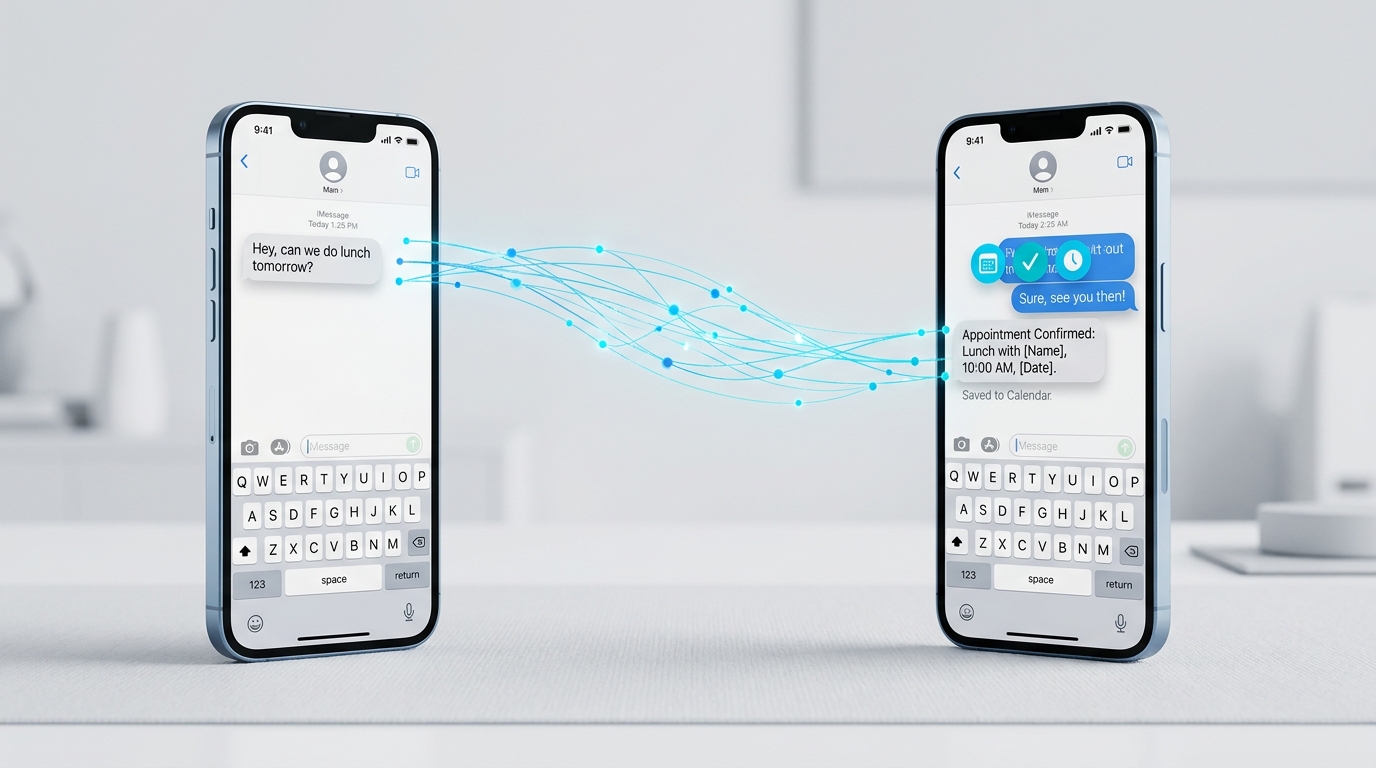
The distinction matters critically. A basic auto-reminder fires a templated message at 24 hours out and stops thinking. An AI keeps the conversation alive. A meta-analysis published in the Journal of Medical Systems confirmed SMS reminders significantly reduce non-attendance — but reminders alone leave revenue on the table. The CDC explicitly lists text messaging as a primary reminder channel in its planning guidance for client outreach. Modern AI extends this from one-way notification into two-way negotiation — and that is where the breakthrough begins.
Quick Tip
The single most important shift in appointment management is not sending more messages — it is building a system that can handle the response. One intelligent reply saves more revenue than a hundred unanswered notifications.
The Hidden Cost of a Missed Appointment Nobody Calculates Correctly
Most operators count a no-show as one lost slot. That math is wrong by an order of magnitude.
A missed appointment carries four compounding costs: the empty slot, the staff time spent preparing for it, the displaced patient who could have filled it, and the downstream lifetime value of a client who feels embarrassed and never returns. A systematic review in Health Policy identified appointment reminders as one of the highest-leverage interventions for reducing no-shows across healthcare and service industries. When a 12-provider clinic sees a 22% no-show rate at $180 per slot, the annual hemorrhage exceeds $940,000 — before factoring in the patients who churn after one bad rescheduling experience.
Did You Know?
An AI that converses does not merely reduce no-shows. It actively rebuilds the calendar in real time — turning every cancellation into an immediate opportunity for another patient to fill the gap, rather than a permanent revenue loss.
Why Sending More Reminders Is Proven to Be the Wrong Answer
Operators who notice a no-show problem instinctively reach for volume — three reminders instead of one, four channels instead of two. The data does not reward this instinct.
An AHRQ evidence brief on appointment recall procedures found that varying reminder timing sequences often produces no measurable improvement. The benefit comes from the reminder existing — and from what happens when the recipient replies. Volume without intelligence creates fatigue, opt-outs, and TCPA exposure. The lever is not more messages. It is a system that handles the response.
This is where most legacy reminder platforms collapse. They send. They cannot listen. When a patient texts back “I need to push this to next week, my flight got canceled,” the platform either ignores the reply or routes it to a staffer who reads it three hours later. The slot dies in the gap — and the revenue dies with it.
Quick Tip
Before evaluating any new reminder tool, audit your current system for one metric: what percentage of inbound patient replies receive an actionable response within 10 minutes? If the answer is below 80%, you have a system problem, not a volume problem.
Exclusive: See the AI in Action on Your Phone
More than 10,000 calendar-driven businesses have already made the switch. Trigger a live AI call to your number and hear exactly what your patients, clients, and customers will experience.
Trigger a Live AI Call to My Phone
No commitment required. Takes less than 30 seconds to set up.
The Two-Way Conversation Is Where Your Revenue Actually Lives
Sending a confirmation request is the easy part. Interpreting “yeah works for me” versus “yeah but can we do 4 instead of 3” is where intelligence earns its keep — and where guaranteed revenue recovery begins.
The CDC’s Text Illness Monitoring program demonstrates the operational pattern at public-health scale: structured “YES” responses, automated handling of non-responders, and escalation rules for ambiguous replies. NewVoices applies this same proven logic with a layer of natural language understanding on top — so a recipient can answer in fragments, slang, or a different language entirely, and the system still books, reschedules, or escalates correctly.
One orthodontic group with 14 locations replaced their manual confirmation process with conversational AI. Front-desk staff had been spending 4.2 hours per location per day on outbound confirmations. After deployment, that dropped to 18 minutes — used only for edge cases the AI flagged for human judgment. The recovered staff hours converted directly into treatment plan presentations, lifting case acceptance by 31%.
Did You Know?
NewVoices operates in 20+ languages on a single deployment. While competitors support centers close at 6 PM, the AI agent continues rescheduling cancellations and recovering revenue — at 11:47 PM on a Tuesday night, without any human involvement.
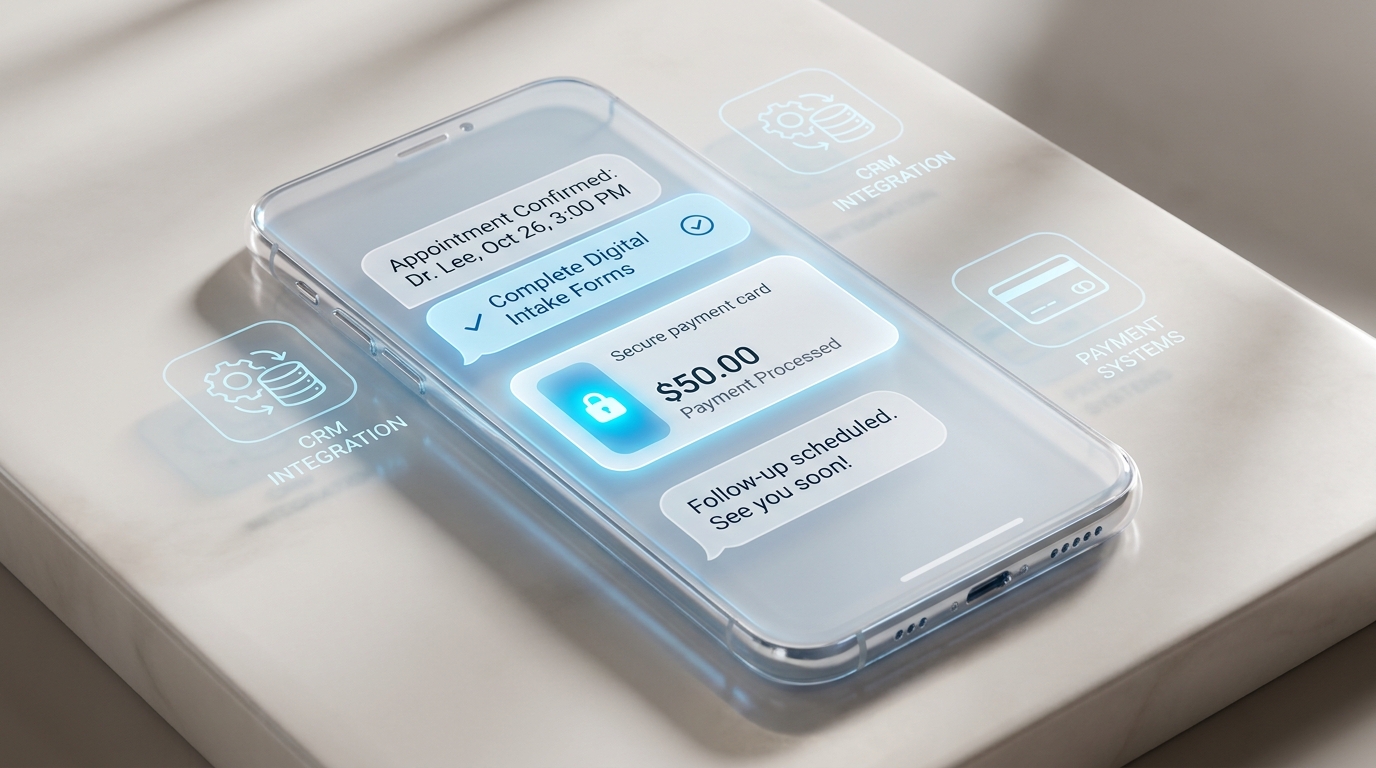
Two-way AI conversation transforms every sent message into a guaranteed revenue recovery opportunity.
Before and After: What Your Calendar Looks Like When AI Runs Confirmations
Before NewVoices, the confirmation workflow looks like this: A staff member pulls tomorrow’s schedule. Calls patient one. Voicemail. Calls patient two. Voicemail. Texts patient three from a personal phone. Forgets patient four. Patient four no-shows. The cycle repeats every afternoon, in every location, forever.
With NewVoices, the workflow looks like this: nothing you need to manage. The AI confirms 600 appointments overnight, reschedules 43 of them through two-way SMS conversation, escalates 7 ambiguous cases to a human, and updates the practice management system before the office opens.
Quick Tip
Print this comparison table and present it to every stakeholder who asks why you are investing in AI confirmation software. The 71% no-show reduction row closes most internal budget conversations on its own.
Compliance Is Not a Feature — It Is the Guaranteed Foundation
The fastest way to destroy a messaging program is to ignore consent law. The FCC has stated unambiguously that the term “call” includes text messages under the TCPA, which means every confirmation SMS sits inside a regulatory framework with real penalties — $500 to $1,500 per message for violations.
The nuance most operators miss: a prior FCC declaratory ruling clarified that prior express consent can extend to a single confirmation text following an inbound message — but the scope is narrow, and reminder cadences require explicit opt-in. NewVoices handles this distinction automatically. Consent state, opt-out timestamp, and channel preference travel with the contact record across every interaction.
For healthcare operators, HHS confirms that appointment reminders are permitted under HIPAA without separate authorization, provided minimum-necessary information is shared. SOC 2 Type II, GDPR, and HIPAA-aligned infrastructure are not optional in regulated industries — they are table stakes. NewVoices ships with all three.
The Phishing Problem Nobody Talks About — and How to Protect Your Brand
NIST has published extensive guidance on smishing — phishing through SMS — and the threat surface keeps expanding. When your confirmation messages look like every other generic reminder, recipients learn to ignore the real ones. Branded sender IDs, consistent message structure, and link-free confirmation flows reduce the chance your legitimate text gets flagged as a scam — protecting both your patients and your reputation.
Industry-Leading Trust Signals
SOC 2
Type II Certified
HIPAA
BAA Available
GDPR
Fully Compliant
TCPA
Consent Tracked
Every contact record carries full consent state, opt-out timestamps, and channel preferences — automatically.
What a Generic Reminder Tool Cannot Do — and Where Your Revenue Leaks
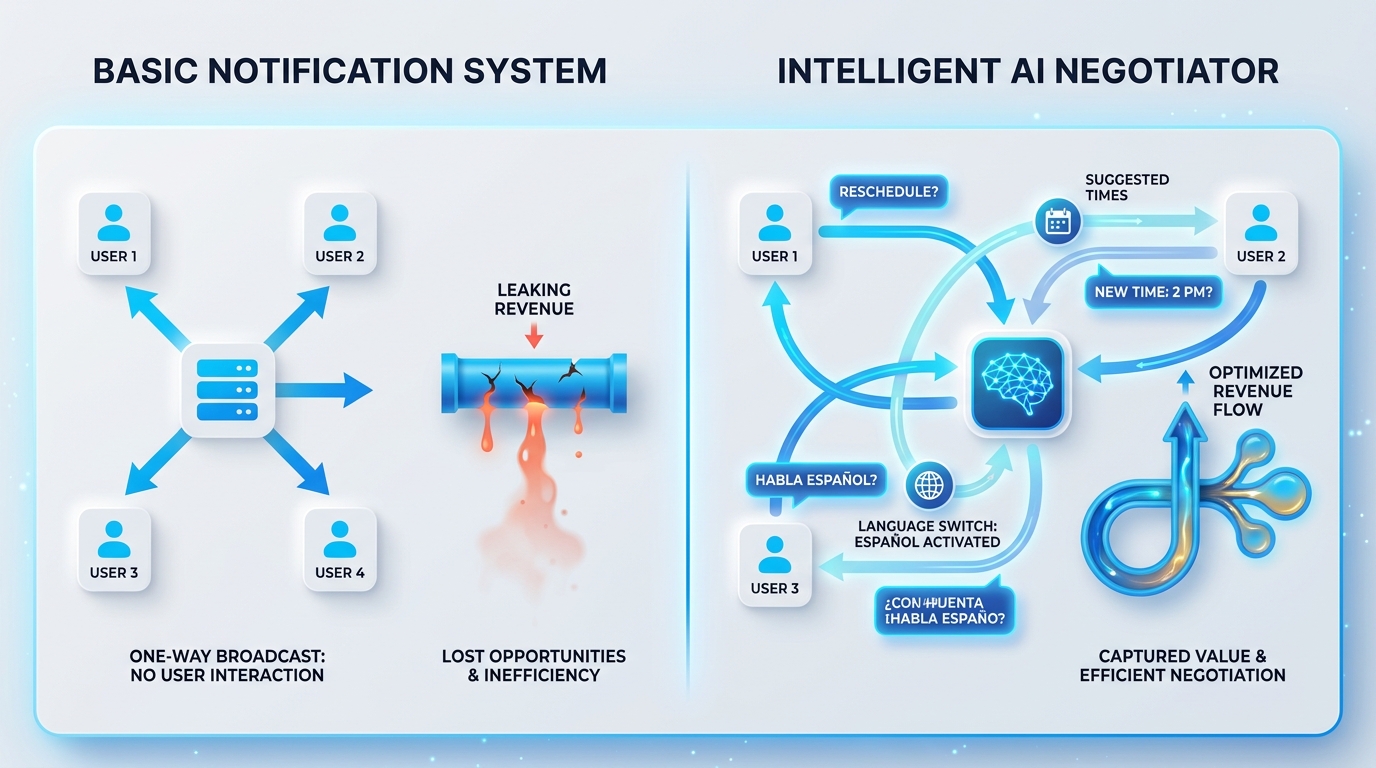
Every unanswered reply from a generic reminder tool is a confirmed revenue leak — one your AI could have recovered in under 6 seconds.
A reminder is a notification. A confirmation AI is a negotiator. The difference between them is measured in dollars per week, not features per page.
Consider three scenarios most platforms cannot handle. A patient replies “my daughter is sick can we move to next Tuesday morning” — the AI checks availability, offers two slots, books one, and updates the EHR. A high-value client texts “running 20 min late” at 2:47 PM for a 3 PM appointment — the AI notifies the provider, adjusts the buffer, and sends a courtesy text to the 3:30 patient. A sales prospect responds in Spanish to an English reminder — the AI switches language mid-conversation and continues without missing a beat.
NewVoices runs in 20+ languages on a single deployment. Explore how this connects across the broader conversational AI platform — confirmation is one workflow inside a larger, interconnected revenue engine.
Quick Tip
Map your current no-show scenarios against these three examples. If your existing platform cannot autonomously handle even one of them, you are not running a confirmation system — you are running a notification system that relies on your staff to do all the actual work.
The Copy Matters More Than the Cadence — Proven by Randomized Controlled Trials
One of the most counterintuitive findings in appointment-reminder research: message content drives more behavioral change than message timing. A pair of randomized controlled trials found that simply stating the cost of a missed appointment in the reminder text reduced no-shows measurably more than identical messages without the cost reference.
This is the kind of exclusive optimization a static reminder tool cannot perform. NewVoices A/B tests message variants automatically — different framings, different incentives, different tones — and routes each contact toward the variant that performs best for their segment. A pediatric clinic might respond best to warm, parent-focused language. A luxury aesthetic practice converts higher with confident, concierge-style copy. The AI learns this without anyone writing a rule.
One multi-location veterinary group ran 14 message variants across 90 days. The winning template lifted confirmation rates from 67% to 91% — a result no human copywriter would have predicted from intuition alone.
Social Proof: Real Results from Real Operators
“We went from 67% confirmation rates to 91% in 90 days. Our operations director built the entire flow herself — no engineers, no IT tickets, no six-month project plan. The AI paid for itself in week one.”
— Multi-Location Veterinary Group, 8 Locations, Southwest Region
How Smart Operators Choose a Confirmation AI — and Avoid Expensive Mistakes
Vendor selection separates the operators who scale from the ones who buy a tool and abandon it in six months. The decision rests on five questions, not feature lists.
The last row is the one most buyers underweight. A vendor charging per message has economic incentive to send more messages. A vendor pricing on outcome alignment has economic incentive to make every message count — which is exactly the incentive structure your revenue deserves.
Quick Tip
During any vendor demo, ask this single question: “Show me, live, what happens when I reply to a confirmation in a language other than English.” The answer — or the inability to answer — will tell you everything you need to know about the depth of the system’s intelligence.
Implementation Without the Six-Month Project Plan — Go Live in Under 14 Days
Most enterprise software promises easy deployment and delivers a Gantt chart. NewVoices ships with a no-code Agent Studio that lets operations teams build, test, and launch confirmation flows without writing code or filing engineering tickets.
The deployment pattern that works across every industry vertical: Week one, connect the calendar or practice management system through a native integration. Week two, configure consent capture at the point of booking and import existing opt-in records. Week three, launch a single confirmation flow in production with a small subset — a single location or service line. Week four, expand based on observed performance.
Social Proof: Proven 30-Day Deployment
“Contract signature to live confirmation flows in 11 days. Our operations director — not an engineer — built the entire flow in Agent Studio. By day 30, no-shows had dropped 64% across all 8 locations. I have never seen an enterprise tool move this fast.”
— Regional Medspa Group, 8 Locations, Operations Director
Read more proven deployment patterns in the NewVoices resource library, or skip the reading and trigger a live AI call to your phone to hear the quality firsthand.
Ready to recover your first $10,000 in lost appointment revenue?
Join 10,000+ businesses already running conversational AI confirmations. Get a working prototype mapped to your exact workflow — no commitment, no engineering resources required.
Request My Free Working Prototype
Guaranteed response within one business day. Zero-pressure conversation.
The Four Metrics That Reveal Whether Your AI Is Actually Working
Confirmation rate is a vanity metric. Slot fill rate is the one that matters — and most operators never measure it correctly.
A confirmation AI can produce 95% confirmation rates and still leave revenue on the floor — if it does not backfill canceled slots within the same business day. The full performance picture requires four measurements running in parallel: confirmation rate, no-show rate, cancellation-to-rebook latency, and net slot utilization. A pragmatic investigation in a safety-net health system documented exactly this pattern — SMS reminders affected attendance, but workflow integration determined whether the impact translated into operational gains.
71%
Average no-show rate reduction with conversational AI
6 sec
Average response time for AI confirmation and rescheduling
0 hrs
Staff time required per 1,000 confirmations weekly
14 days
Maximum time to go live with no engineering required
Targeted reminders for higher-risk segments — first-time patients, weekend appointments, services with historically elevated no-show rates — produce outsized returns. A pragmatic randomized study found that targeted retry sequences for high-risk appointments reduced missed visits beyond what blanket reminders achieved. NewVoices identifies these segments automatically and adjusts cadence accordingly — no rule-writing required.
Where This Goes Next: Confirmation as a Conversation, Not a Notification
The breakthrough future of appointment management: one continuous SMS thread replacing portals, apps, and fragmented workflows entirely.
The frontier is not faster reminders. It is eliminating the distinction between confirmation, rescheduling, intake, payment collection, and post-appointment follow-up entirely. A patient who confirms via SMS today should be able to fill out their intake form, pay their copay, and receive their prep instructions in the same thread — without ever opening a portal or installing an app.
This is not a chatbot answering FAQs. It is a continuous customer relationship managed through the channel customers actually open. NewVoices integrates natively with Salesforce, HubSpot, Zendesk, Stripe, and Twilio — so the confirmation conversation flows into the same record where the lead originated, the payment processes, and the renewal lives.
The practices, clinics, and enterprises pulling ahead are not the ones sending more reminders. They are the ones replacing notification systems with conversational systems. To see what your confirmation flow could look like running on AI that actually listens, talk to the NewVoices team and request a working prototype mapped to your current workflow.
Your front desk goes home at 5 PM. Your AI just confirmed tomorrow’s 8 AM appointment, rescheduled a Tuesday cancellation into Wednesday’s open slot, and recovered $1,840 in revenue while everyone slept. That is not the future. That is a Tuesday night.
Your Calendar Is Losing Revenue Every Night Your AI Is Not Running
Join 10,000+ businesses that have already stopped losing appointments to outdated reminder systems. Get a working AI confirmation prototype built around your exact workflow — at no cost and with no engineering resources required.
Average customer recovers their first $10,000 in previously lost appointment revenue within 30 days of going live.
No commitment. No engineering resources. Guaranteed response within one business day.