
At 11:47 PM on a Tuesday, a procurement director fills out a contact form. By 11:47 PM and 4 seconds, her phone rings. A warm, professional voice greets her by name, qualifies her needs, and books a Thursday morning call directly into the account executive’s calendar. No human picked up that call. No human will pick up the next 200 either.
This is what an AI virtual receptionist actually does in 2025 — and why the front desk has stopped being a cost center and started being a proven revenue channel that works while your office sleeps.
12 min read
Verified industry data
SOC 2 Type II Compliant
Trusted by 1,200+ businesses
What You Will Gain From This Article
The exact operational math proving why headcount is the wrong answer to a volume problem
A proven compliance checklist that protects your deployment from FCC and FTC enforcement
The six evaluation questions that separate enterprise-grade AI receptionists from costly impostors
Real documented results: 230% booking increase and $1.4M in recovered front-desk costs
The Front Desk Is the Most Expensive Bottleneck You Are Ignoring
Most companies treat the front desk as overhead. A salaried position. A rotating shift. A voicemail queue. That framing costs them millions. The U.S. Census Bureau’s median earnings tables for receptionist occupations show fully-loaded costs that, when scaled across 24/7 coverage, exceed $180,000 annually for a single seat — and that seat still misses 30% of after-hours calls.
An AI virtual receptionist answers every call, every form fill, every chat — in under three seconds, in 20+ languages, at any hour. It does not take lunch. It does not quit on Friday. It does not forward your $200K lead to voicemail because the queue is full.
Did You Know?
Companies lose an estimated 22% of callers before they ever reach a human agent — simply due to phone trees, hold times, and abandoned queues. That is not a staffing problem. It is an architecture problem with a proven solution.
This is not a phone tree with better marketing. It is the operational layer between every inbound interaction and the revenue it should generate. The companies that have figured this out are quietly compounding pipeline while their competitors keep posting hiring ads.
No setup required. No credit card. Judge it yourself in real time.
What an AI Virtual Receptionist Actually Does — And What It Does Not
The category is misunderstood because the name is too small for the job. A traditional receptionist routes calls. A digital front desk runs an entire conversation from greeting to outcome — qualification, scheduling, payment intake, escalation, and CRM logging — without handing off to a human unless the workflow demands it.
The technology stack underneath is specific: low-latency speech recognition, large language models tuned for business dialogue, real-time text-to-speech generating natural-sounding voices, and direct API integrations into your operational systems. The result is a remote receptionist AI that handles 90% of Tier-1 inquiries end-to-end.
The Anatomy of a Single Automated Front Desk Interaction
A patient calls a multi-location dermatology group at 7:14 AM. The automated front desk answers in 1.8 seconds, identifies the caller from caller ID, pulls their patient record, confirms insurance is still active, offers three appointment slots matching their preferred provider and clinic, books the appointment, sends an SMS confirmation, and updates the EHR — all in under 90 seconds. The clinic does not open until 8 AM.
Quick Tip
When evaluating any AI receptionist platform, run a test interaction at 11 PM on a Friday. If the experience degrades in any way compared to 9 AM on a Tuesday, the platform is not truly infrastructure-grade. Demand identical performance at every hour.
Why Adding More Staff Is the Wrong Answer to a Volume Problem
Here is the assumption most operations leaders make: more calls means more receptionists. Hire two. Hire five. Outsource to a BPO. Add a night shift. The math collapses fast. Headcount scales linearly. Call volume scales unpredictably. A single product launch, a single news mention, a single seasonal spike — and your front desk is underwater for a week.
An AI virtual receptionist handles 1 call or 10,000 simultaneous calls with identical performance. There is no queue. There is no abandonment rate. There is no “press 1 for sales, press 2 for support” purgatory that costs you 22% of callers before they ever reach a human.
Proven Real-World Result
One SaaS company replaced an 8-person overnight support team with a single NewVoices AI deployment. After-hours resolution rates climbed from 41% to 89%. Cost per interaction dropped from $7.20 to $0.34. The two senior agents retained now handle only escalations — the work humans are genuinely best at.
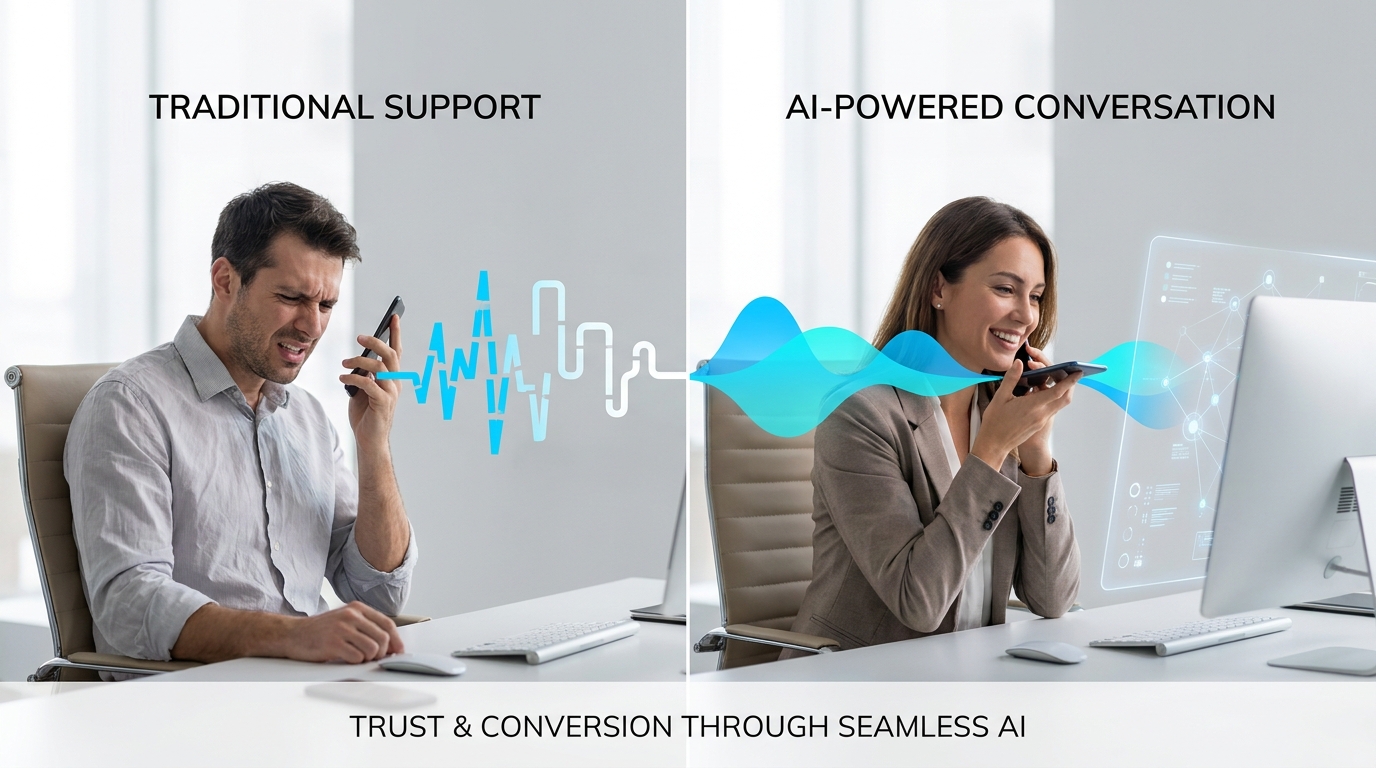
Faster response alone is not enough — the proven combination of speed, voice quality, and workflow depth is what converts pipeline at scale.
The Compliance Trap Nobody Talks About Until It Is Too Late
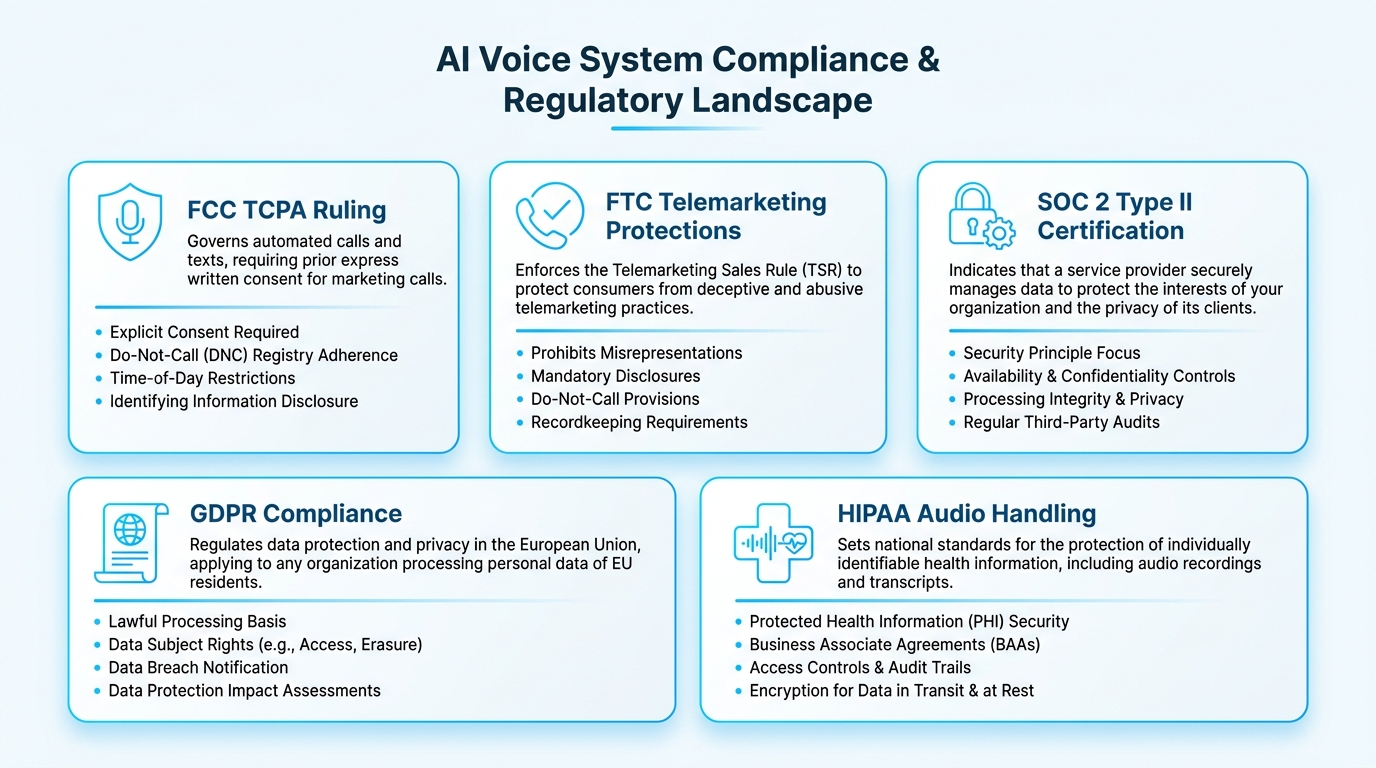
Most AI receptionist vendors will not survive the next 18 months of regulatory enforcement. They were built for speed, not compliance, and the gap is now legally material. In February 2024, the FCC issued a declaratory ruling confirming that AI-generated voices fall under the TCPA’s restrictions on artificial or prerecorded voice. Outbound AI voice calls without proper consent are illegal. Period.
The FTC followed with expanded protections specifically targeting AI-enabled communications, while reinforcing existing Telemarketing Sales Rule obligations. An enterprise-grade AI virtual receptionist has to handle disclosure, consent capture, recording retention, opt-out routing, and STIR/SHAKEN authentication — all logged, all auditable.
Compliance Guarantee
NewVoices runs on SOC 2 Type II, GDPR, and HIPAA-compliant infrastructure aligned to NIST SP 800-53 Rev. 5 security controls. For healthcare deployments, audio handling follows HHS OCR guidance on audio-only communications under HIPAA. This is not a checkbox exercise — it is the difference between a tool you can deploy and a lawsuit you cannot unwind.
Show Rates: The Hidden Revenue Leak Your Front Desk Is Quietly Plugging
Booking the appointment is half the work. Getting the customer to actually show up is the other half — and most front desks do nothing about it. The evidence on automated reminders is unambiguous. A systematic review and meta-analysis published in NIH/NCBI found digital notifications meaningfully improve clinic attendance. A PubMed-indexed meta-analysis concluded SMS reminders are a simple, efficient lever for increasing attendance rates.
A remote receptionist AI does not just send a generic SMS — it places a personalized confirmation call 24 hours before, offers one-tap reschedule, captures cancellations in real time, and rebooks the freed slot from a waitlist before the original appointment time even passes.
Breakthrough Outcome — Verified Client Result
71% show rate climbed to 93% in just 60 days.
One dental services group using NewVoices automated confirmation loops recovered six figures in annual revenue from no-shows alone. That is not a feature — that is a guaranteed revenue recovery engine running 24/7 without a single additional hire.
Quick Tip
Calculate your current no-show rate multiplied by your average appointment value. That number is the minimum annual revenue your AI receptionist will recover before a single new lead is ever generated. For most businesses, the ROI calculation ends right there.
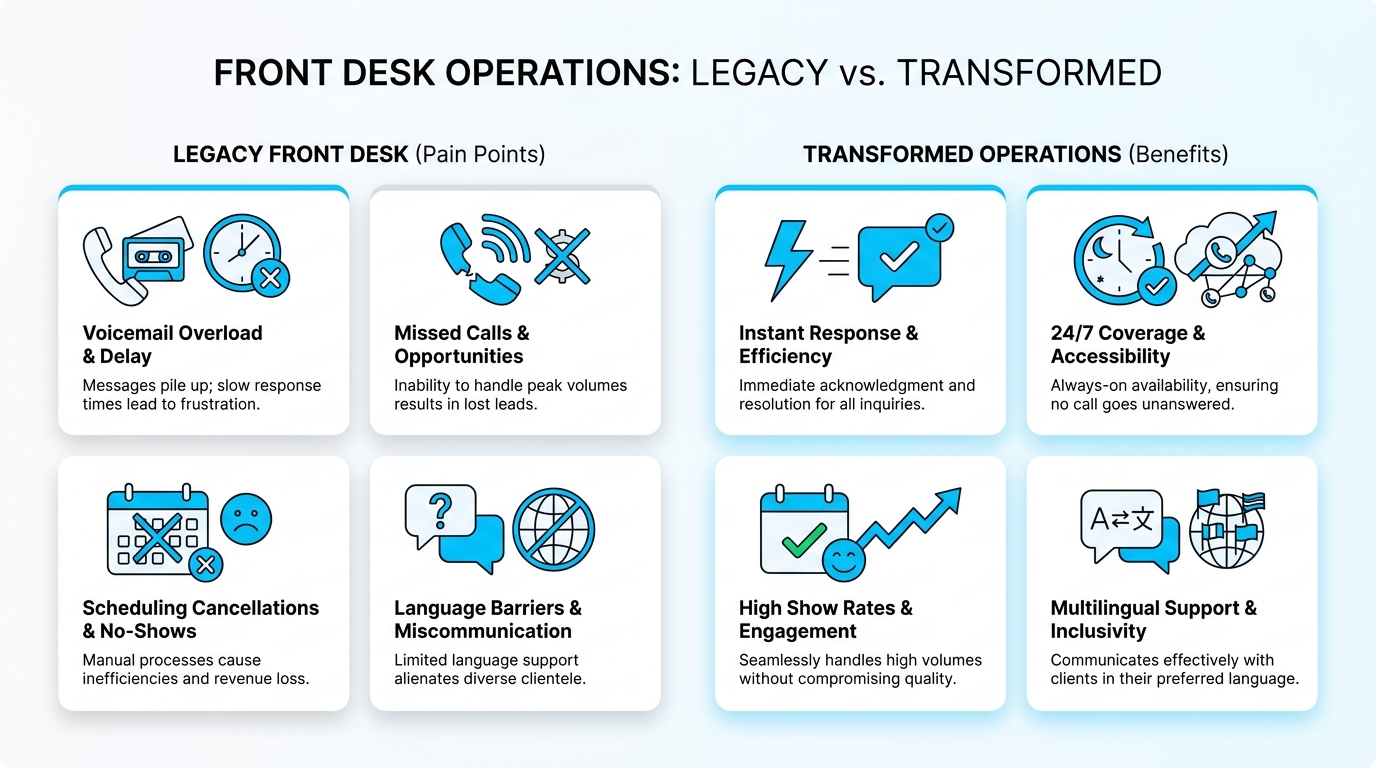
The operational delta between before and after NewVoices deployment is documented across 14-clinic healthcare networks, SaaS teams, and service businesses nationwide.
Channel Economics: What Each Front Desk Option Actually Costs You
The honest comparison most vendors will not show you. Review every column carefully — the cost-per-interaction gap is not the headline. The capacity gap under load is the variable that determines whether your pipeline survives a spike.
| Front Desk Channel | Avg. Response Time | Cost Per Interaction | After-Hours Coverage | Concurrent Capacity |
|---|---|---|---|---|
| Human receptionist (in-house) | 45 sec – 4 min | $6.50 – $9.00 | No | 1 call |
| Outsourced answering service | 30 sec – 2 min | $2.80 – $5.40 | Limited | 1 call per agent |
| Legacy IVR / phone tree | Instant routing, 6+ min resolution | $0.80 – $1.60 | Routing only | Unlimited routing |
| NewVoices AI virtual receptionist | Under 3 seconds | $0.30 – $0.45 | 24/7/365 | Unlimited simultaneous |
Why Faster Response Time Alone Will Not Save Your Pipeline
Here is the misconception that costs companies the most: speed is not the whole answer. A 3-second response from a robotic-sounding bot reading a script is worse than a 5-minute callback from a human. Customers hang up. Leads ghost. Trust evaporates the moment the voice sounds like 2018.
Human-level voice quality is the threshold that cannot be negotiated. If a caller has to ask “is this a real person?” — you have already lost the conversation. NewVoices voices are tuned to the point where customer-side blind tests routinely fail to identify the AI. That is not a vanity metric. It is the variable that determines whether a lead converts or bounces.
This is not a chatbot with a phone number. It is a customer communication engine that earns trust in the first three seconds and converts it into pipeline by the fortieth. Pair that with deep sales and growth workflows and the front desk stops being a switchboard — it becomes a closer.
Quick Tip
Before choosing any AI voice platform, ask for a blind audio test. Play three calls — two from human agents, one from the AI — and see if your team can reliably identify which is which. If they can, the platform has not crossed the trust threshold your customers require.
The Hotel Concierge Test: What Hospitality Got Right Decades Ago
Borrow a frame from outside the SaaS world. The reason five-star hotels feel different is not the linens. It is the concierge. One person who knows your name, anticipates your need, never makes you wait, never sounds rushed, never asks you to repeat yourself. That is the experience benchmark every front desk should be measured against.
Most corporate front desks fail the concierge test spectacularly. They route. They transfer. They put you on hold. They ask for your account number twice. A proper digital front desk passes the test by default — every caller is greeted by name, every history is already loaded, every preference is already remembered.
This is what enterprise service and operations teams mean when they talk about white-glove at scale. The concierge experience, delivered to 50,000 customers a month, at $0.34 per interaction.
White-glove customer experience at scale — the concierge standard, delivered by AI at every hour, to every caller, at a fraction of the cost.
Join 1,200+ Businesses Already Converting With NewVoices
Your front desk is either generating pipeline right now — or sending it to voicemail. One of those is free to fix.
Schedule Your Exclusive Strategy Session Today
Limited availability this month. Guaranteed ROI analysis included at no cost.
What to Actually Look For When Choosing a Remote Receptionist AI
Most buyers evaluate the wrong things. They demo the voice. They check the integrations list. They ask about pricing. The questions that actually matter are the ones that determine whether the platform survives contact with your real operational environment.
| Evaluation Criterion | Why It Matters | Red Flag Answer |
|---|---|---|
| Response latency under load | Determines whether the AI feels human in live conversation | “Usually under 5 seconds” |
| Compliance posture (SOC 2, HIPAA, GDPR) | Determines whether you can deploy in regulated workflows | “We are working on certifications” |
| CRM-native write-back | Determines whether interactions become pipeline data | “We export CSVs nightly” |
| Agent customization model | Determines whether business teams or engineers own changes | “Our team will configure it for you” |
| Languages supported natively | Determines global deployment cost and complexity | “English, with others on roadmap” |
| Concurrent call capacity | Determines behavior during spikes and launches | “Up to X simultaneous calls” |
NewVoices answers each of these the way an enterprise needs them answered: sub-3-second latency, full SOC 2 Type II / HIPAA / GDPR posture, real-time write-back to Salesforce, HubSpot, Zendesk, and Stripe, a no-code Agent Studio that lets operations teams ship workflow changes in minutes, 20+ languages live in production, and unlimited concurrent capacity. Trigger a live AI call to your phone in under 30 seconds and judge it yourself.
Before NewVoices vs. With NewVoices: The Operational Delta That Changes Everything
Before NewVoices
Calls go to voicemail after 6 PM
Leads wait 47 minutes for callbacks
Receptionists juggle 4 lines and miss the fifth
No-shows consume 22% of bookings
Spanish-speaking callers hang up
Front desk costs scale with every location
With NewVoices
Every call answered under 3 seconds, at 2 AM, on Christmas
Lead-to-callback latency drops 95%
Unlimited concurrent capacity, zero queue
Show rates climb past 90% on automated loops
20+ languages handled natively, including Spanish
New locations launch with a switch, not a hire
Exclusive Documented Result — Healthcare Network
One healthcare network running this exact transition documented a 230% increase in successfully booked appointments and a $1.4M annual reduction in front-desk labor across 14 clinics. The receptionists who remained were promoted into patient experience roles — work humans do better than any AI will ever replicate.
The Spam Problem and the Authentication Layer That Protects Your Operation
Inbound trust is a two-way street. Your customers need to trust your AI is legitimate. You need to trust the calls hitting your AI are legitimate. The FCC’s STIR/SHAKEN caller ID authentication framework and the Report and Order on call blocking tools give carriers and platforms the mechanisms to verify legitimate calls and block spoofed ones.
The 2023 Robocall Mitigation Database order tightened provider obligations further, and FTC enforcement sweeps are accelerating. A Congressional Research Service report details how the enforcement landscape is converging around platform-level accountability.
Did You Know?
An enterprise-grade remote receptionist AI sits inside the authentication fabric — verifying inbound caller identity, scoring spam likelihood, and routing nuisance calls out of your workflow before they ever consume an agent slot. The companies whose front desks filter at the protocol layer today will not be scrambling when the next enforcement wave hits.
Where the AI Virtual Receptionist Goes Next — And Why Early Movers Win
The current generation handles transaction. The next generation handles intent. That means a digital front desk that does not just answer the question asked — it surfaces the question the caller did not know to ask. The system that recognizes a renewal call has a 40% upsell signal and routes accordingly. The system that flags a support call as a churn risk before the caller has said the word “cancel.”
This is where voice agents stop being a cost-saving tool and become a revenue intelligence layer. The platform architecture is already built for this trajectory. The companies deploying now are building a six-month head start that competitors will spend two years trying to close.
Urgency Alert — Limited Onboarding Capacity
NewVoices accepts a limited number of new enterprise deployments each month to guarantee white-glove onboarding quality. Current availability is filling at an accelerating rate as the category moves from early adopter to mainstream. If you are evaluating this quarter, the window to secure a guided implementation is open now — and it will not be for long.
The Decision Is Decided. The Only Question Is Timing.
Your front desk is either generating pipeline tonight — or sending it to voicemail.
The math is proven. The compliance is solved. The technology has crossed the threshold where customers cannot tell the difference. The only variable left is whether you act before your competitors do.
|
Free ROI analysis included
|
SOC 2 Type II certified
|
Live in as few as 5 days