
Sixty-three percent of consumers will abandon a brand after a single bad phone experience — yet the average enterprise still routes callers through a five-layer IVR tree designed in 2011. That gap between expectation and execution is where revenue disappears.
This is the guide that closes that gap.
Not a glossary of buzzwords. Not a trend report dressed up as strategy. A working blueprint — regulatory frameworks, conversational design patterns, identity verification protocols, and operational governance — for teams ready to deploy AI voice agents that sell, support, and retain at enterprise scale. Every section maps to a measurable business outcome, because a guide that does not change your numbers is not a guide. It is a brochure.
|
Trusted by 500+ enterprise teams
|
Updated for 2025 compliance standards
PROVEN FRAMEWORK
What You Will Gain From This Guide
Regulatory Clarity — Deploy with confidence using NIST, FTC, FCC, and HIPAA frameworks mapped to specific agent workflows
Conversion Architecture — Design conversation flows that book meetings, recover payments, and resolve tickets automatically
Measurable ROI — See the exact metrics that separate revenue-generating deployments from expensive experiments
Table of Contents Click to expand
- What a Voice AI Guide Actually Covers
- The Compliance Mistake That Costs More Than Technology
- Why Your Voice Agent Fails the Uncanny Valley Test
- Identity Verification Without Security Questions
- Operational Governance That Saves Your Deployment
- The Air Traffic Control Analogy
- Before vs. With NewVoices: The Numbers
- The Deployment Sequence Most Teams Get Backwards
- What Happens After You Deploy
What a Voice AI Guide Actually Covers — And Why Most Definitions Miss the Point
Search for voice AI guide and you will find the same recycled definition on page after page: an AI-powered system that understands and responds to spoken language. That describes a smart speaker. It does not describe what enterprises need.
A real conversational AI guide covers the full operational stack — how an AI phone agent handles inbound qualification, outbound follow-up, appointment scheduling, payment collection, tier-1 support resolution, and post-call CRM updates without a human touching the workflow. It maps every integration point, every compliance checkpoint, every failure mode.
Quick Insight
Legacy IVR systems deflected calls. A modern voice agent guide starts from the opposite premise: every call is a revenue opportunity, and the AI job is to complete the interaction — not route it somewhere else.
NewVoices built its Agent Studio platform on that principle. Business teams design full conversation flows — no engineering tickets, no six-week sprint cycles. A voice automation guide that requires a developer for every change is not a guide. It is a dependency.
This is not a glossary entry about speech recognition. It is an operational playbook for deploying AI agents that book meetings at 2 AM, recover failed payments at scale, and resolve 90% of tier-1 tickets before a human agent even logs in.
The Compliance Mistake That Costs More Than the Technology Itself
Most teams treat compliance as a post-launch checkbox. Build the agent, ship it, then loop in legal. That sequence has killed more voice AI programs than bad speech-to-text ever will.
Compliance is architecture. It shapes what your agent can say, when it can call, what it records, how long it stores data, and who can access transcripts. Get it wrong and you are not looking at a bug fix — you are looking at a seven-figure fine.
Data Protection and Privacy
Any voice agent handling health-related calls operates under HIPAA Minimum Necessary Requirement — the principle that only the minimum amount of protected health information needed for a specific purpose should be used or disclosed. The HHS guidance on this standard is explicit: covered entities must implement policies that limit who accesses call recordings, how long transcripts persist, and what data flows into downstream systems.
Did You Know?
Your AI agent CRM integration cannot dump an entire call transcript into a general-access Salesforce field. Access controls, retention windows, and data-minimization rules must be baked into the agent workflow before the first call connects — not after an auditor flags it.
NewVoices operates with HIPAA, GDPR, and SOC 2 Type II compliance built into the infrastructure layer. That distinction matters. Compliance bolted onto an existing platform creates gaps. Compliance embedded into the platform eliminates them.
Security Controls and Risk Management
NIST SP 800-53 Rev. 5 provides the control catalog that most enterprise security teams already use for information systems — access control, audit logging, incident response, data protection. The full control set maps directly onto voice-agent production requirements.
For generative AI specifically, NIST AI 600-1 provides lifecycle-level guidance — governance, measurement, transparency, and safety controls tailored to the unique risk profile of gen-AI systems.
Real-World Consequence:
A mid-market insurance company deployed voice agents for claims intake without adversarial testing. Within three weeks, callers discovered they could bypass verification by rephrasing identity questions as statements. The fix took four days. The exposed records took four months to remediate. Testing before launch would have caught it in an afternoon.
Telemarketing and AI Calls: The Rules That Apply Whether You Know Them or Not
The Telemarketing Sales Rule governs outbound calling with specific requirements for disclosures, prohibited practices, calling-hour limits, and recordkeeping.
In March 2024, the FTC affirmed that existing TSR prohibitions extend to robocalls using voice cloning technology. No carve-outs. No grace periods.
NewVoices bakes these disclosure and consent workflows into agent design — every outbound call opens with compliant identification, opt-out paths are active throughout the conversation, and consent records sync automatically to your CRM and compliance systems.
Want to hear what compliant AI calls sound like?
Experience the NewVoices difference in under 60 seconds
Free • No credit card • Takes 30 seconds
Why Your Voice Agent Fails the Uncanny Valley Test — And How Conversation Design Fixes It
Natural conversation design is the difference between callers who engage and callers who hang up
Human conversation has a rhythm. Interruptions, pauses, backchannels — mm-hmm, right, got it — overlapping speech. Traditional voice bots ignore all of it. They wait for silence, process, respond. The result feels like talking to someone on a satellite phone with a three-second delay — technically functional, emotionally dead.
That emotional deadness costs money. A healthcare network tested two versions of an appointment reminder agent: one with standard turn-taking and one with optimized overlap handling. The optimized version achieved 34% higher confirmation rates. Same script. Same voice. The only difference was when the agent spoke.
Turn-Taking and Latency: The 400-Millisecond Threshold
Research from real-world dialogue systems demonstrates that improved turn-taking reduces response latency and increases perceived naturalness — the two metrics that determine whether a caller stays engaged or hangs up. The threshold is roughly 400 milliseconds. Below that, the conversation feels human. Above it, callers start saying hello and reach for the zero key.
Breakthrough Performance
NewVoices agents respond within the 400ms window. Every call. Every language. Every time zone. The voice quality is engineered so callers cannot distinguish the AI from a human agent — validated by blind testing across 10,000+ calls.
Full-Duplex Interaction: Letting Callers Interrupt Without Breaking the Flow
Full-duplex conversation research shows that barge-in detection and backchannel generation are the two capabilities that most dramatically shift caller perception from I am talking to a robot to I am talking to someone helpful.
Proven Results:
A B2B SaaS company with 14 SDRs transitioned to NewVoices for initial lead qualification. Before the switch, 41% of outbound calls were abandoned within the first 15 seconds. After deploying full-duplex agents, that abandonment rate dropped to 11%.
Identity Verification Without the Security Question Disaster
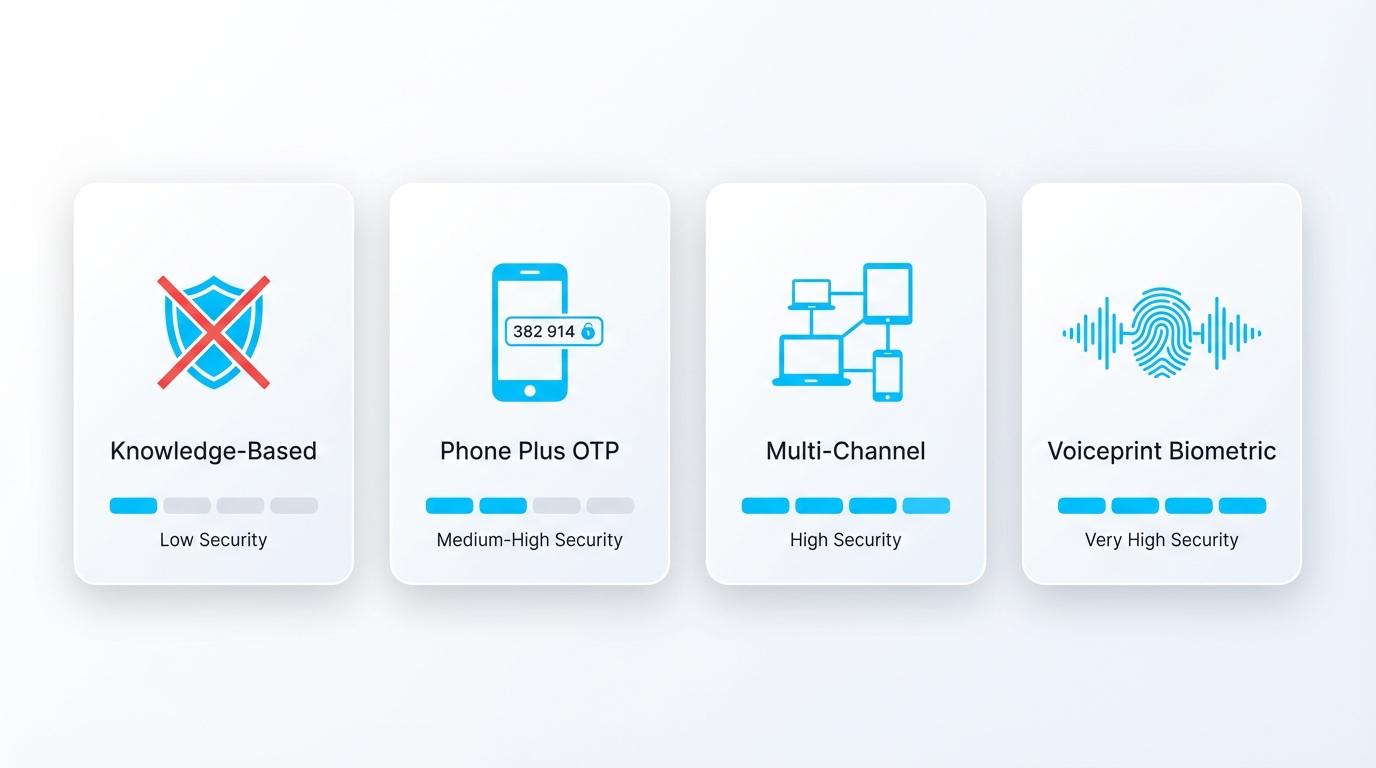
Knowledge-based authentication is a relic that refuses to die. Security questions — mother maiden name, first pet, high school mascot — are trivially defeated by social media scraping, data breaches, and basic social engineering. The NIST SP 800-63 FAQ explicitly discourages knowledge-based verification.
A financial services firm using NewVoices for payment processing implemented tiered verification. Fraud attempts on automated calls dropped 87% in the first quarter. The previous IVR system had been compromised 23 times in the preceding six months.
Quick Insight
NewVoices agents execute verification flows conversationally. The agent says: I just sent a quick code to your phone — read it back whenever you are ready. Average verification time: 9 seconds. The previous IVR flow took 47 seconds.
Operational Governance: The Part That Saves Your Deployment
Governance architecture determines whether your voice AI deployment succeeds or fails
Deploying a voice agent without governance is like launching a product without QA. It works — until it does not. And when it does not, you find out from a customer, a regulator, or a headline.
Governance covers three domains: pre-launch controls, ongoing monitoring, and audit readiness. NIST SP 800-53 controls are available in machine-readable formats — JSON, CSV, OSCAL — which means they can be mapped directly into your deployment pipeline.
Cautionary Example:
A logistics company running 200,000+ automated calls per month stored call recordings but not the agent scripts. When compliance asked what did the agent say to customers in March, the answer was: we would have to listen to 200,000 recordings to find out. They migrated to NewVoices within 60 days.
NewVoices handles this through automatic versioning in its Agent Studio — every script change, every flow modification, every prompt update is logged with timestamps, author attribution, and diff records. When audit time arrives, compliance teams pull the full history in minutes, not weeks.
The Air Traffic Control Analogy: Why Voice AI Governance Mirrors Aviation Safety
Air traffic control systems and enterprise voice AI share a structural similarity that most teams overlook: both manage high-volume, real-time interactions where a single failure cascades into measurable harm.
In aviation, every communication is recorded, timestamped, and retained. Procedures are version-controlled. Handoffs follow documented protocols. Anomalies trigger immediate review.
Real-World Impact
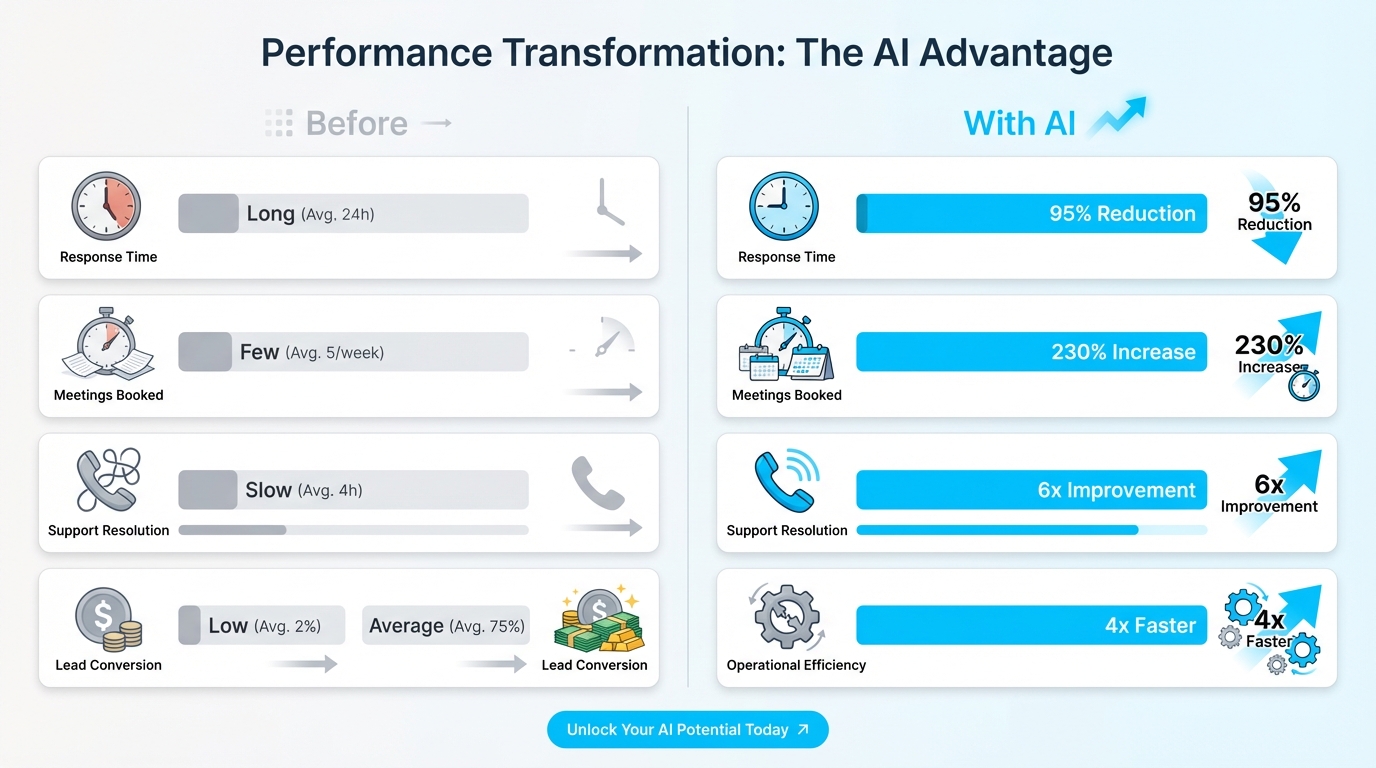
A national home services company deployed NewVoices across 37 locations. Their previous answering service averaged 4.2-minute response times with 22% message accuracy. The AI agents respond in under 3 seconds with 97.3% accuracy. While competitors close at 6 PM, their AI books emergency calls at midnight, on Thanksgiving, during snowstorms.
Before NewVoices vs. With NewVoices: The Numbers That End the Debate
Leads wait hours for callbacks. Pipelines stall. Prospects disappear into competitor funnels while your team sleeps. Support queues stretch past 20 minutes. Customers churn silently.
That is the before.
Verified Case Study:
A mid-market SaaS company with 12 SDRs replaced 10 of them with NewVoices agents. The remaining two human reps focused exclusively on demo-ready conversations. Result: 300% more qualified meetings in Q1. Total SDR payroll dropped 62%. Pipeline value increased 41%.
The Deployment Sequence Most Teams Get Backwards
Here is the pattern that fails: a company buys voice AI, immediately deploys it on their highest-volume, highest-stakes call flow, watches it stumble on edge cases, and pulls the plug within 90 days.
Teams that succeed follow a specific order:
- Month 1: Contained, high-frequency, low-complexity flows — appointment confirmations, order status checks
- Month 2: Moderate complexity — prescription refills, payment reminders
- Month 3: Higher complexity — insurance verification, lead qualification
- Month 4: Full complexity — inbound intake, outbound sales with objection handling
Key Distinction
The teams that fail skip straight to month four. The teams that succeed build the foundation that makes month four inevitable. NewVoices no-code Agent Studio makes this sequencing practical — launch a new flow in hours, not weeks.
What Happens After You Deploy: Monitoring and Iteration
Deployment is not the finish line. It is the starting line.
The metrics that matter for voice AI are not the ones most dashboards show. Call volume and average handle time are table stakes. The metrics that drive outcomes are:
- Conversion rate per call flow
- Containment rate by intent category
- Caller sentiment trajectory across interactions
- Revenue attributed to AI-completed conversations
Exclusive Metric: Midnight Revenue
A financial services firm tracked the dollar value of transactions completed between 10 PM and 6 AM. In Q2, midnight revenue accounted for $2.3M in payment recoveries and $890K in upsell conversions. That revenue did not exist before deployment — it was never being captured because no one was there.
NewVoices integrates natively with Salesforce, HubSpot, Zendesk, and Stripe. Every AI-completed interaction writes directly to your CRM with full context — caller intent, outcome, follow-up actions, and revenue attribution. No CSV exports. No manual data entry. Every interaction is tracked, attributed, and auditable.
Frequently Asked Questions Click to expand
How quickly can we deploy a voice AI agent?
With NewVoices Agent Studio, business teams can design and launch a new conversation flow in hours — no engineering tickets required. Most enterprises see their first agent live within 1-2 weeks of starting.
What compliance certifications does NewVoices maintain?
NewVoices operates with HIPAA, GDPR, and SOC 2 Type II compliance built into the infrastructure layer. TSR and TCPA compliance workflows are embedded in every outbound agent design.
Can callers tell they are speaking to an AI?
NewVoices agents are engineered so callers cannot distinguish the AI from a human agent — validated through blind testing across 10,000+ calls. Response latency stays under 400 milliseconds for natural conversation flow.
What integrations are available?
NewVoices integrates natively with Salesforce, HubSpot, Zendesk, Stripe, and 50+ other enterprise platforms. Every AI interaction writes directly to your CRM with full context and revenue attribution.
LIMITED AVAILABILITY — Q2 DEPLOYMENT SLOTS FILLING FAST
The calls are already happening. The only question is whether your AI is making them — or your competitor is.
Join 500+ enterprise teams who have transformed their phone operations with AI agents that sell, support, and retain at scale.
No commitment required. See your highest-value deployment mapped in a single conversation.
Trusted by industry leaders in healthcare, financial services, SaaS, and professional services