
What if 62% of your potential customers vanished before you even knew they existed? That is exactly what happens every time a caller reaches your voicemail and never calls back.
The silent revenue leak that traditional call centers cannot fix — and the breakthrough technology that eliminates it completely.
|
Updated January 2025
|
Backed by Columbia University Research
Industry Leading
Transform Your Inbound Calls Into a Revenue Engine
3 sec
Average Answer Time
91%
Calls Resolved by AI
$4.7M
Proven Annual Savings
Navigate This Guide+
- The $4.7 Million Mistake: Treating Calls as Costs
- What an Inbound AI Agent Actually Does
- Why Speed Alone Will Not Fix Your Problem
- The Hotel Front Desk Principle
- Before vs After: Real Deployment Numbers
- The Compliance Question Nobody Asks
- The Hire More Reps Fallacy
- Deploy Without Writing Code
- The Call Data You Are Throwing Away
- What Happens When Every Call Gets Answered
Limited Time: Free AI Voice Assessment
Discover how many calls your business is missing — and the revenue you could recover
Sixty-two percent of callers who reach voicemail never call back. That statistic alone — drawn from Columbia University research on telephone call center operations — represents the silent bleed most enterprises never bother to measure. Not lost leads. Not missed opportunities. Evaporated revenue. Gone before your team even knew it existed.
And yet, the default response at most companies is the same: hire more agents, extend shift hours, pray the hold queue does not hit 14 minutes during a product launch. That playbook stopped working five years ago.
What replaced it is not a staffing model. It is an architectural shift. Inbound AI phone answering — the kind that picks up in under three seconds, speaks in a voice indistinguishable from your best agent, and routes, qualifies, and resolves without a single human touching the call — is rewriting the economics of every inbound phone interaction. This is not an answering machine with better software. It is the reason a 40-person insurance brokerage now handles the same call volume as a 200-seat contact center.
The $4.7 Million Mistake: Treating Inbound Calls Like a Cost Center
Most enterprises build their inbound call infrastructure around a single question: How do we handle this volume as cheaply as possible? That question is a trap.
It leads to IVR trees that feel like navigating a government bureaucracy. It leads to offshore teams reading scripts they did not write for products they have never used. It leads to average hold times that climb past six minutes — the exact threshold where, according to call center queueing research, abandonment rates spike exponentially.
Did You Know?
Hold times exceeding 6 minutes cause abandonment rates to spike exponentially — not linearly. Every additional minute after that threshold loses you significantly more callers than the minute before.
A mid-market healthcare network discovered this the expensive way. Their traditional call center handled 11,000 inbound calls per month. Average speed to answer: 4 minutes, 22 seconds. Appointment no-show rate: 31%. After deploying an inbound AI agent through NewVoices service and operations platform, speed to answer dropped to 2.8 seconds. No-show rates fell to 11% — consistent with peer-reviewed findings showing targeted reminder calls reduce missed appointments by up to 39%. The annual savings exceeded $4.7 million when factoring in recovered revenue from appointments that actually happened.
Quick Tip: Reframe Your Thinking
The inbound call is not a cost to be minimized. It is a conversion event to be optimized. Every call represents a customer choosing to engage with you at their moment of highest intent.
What an Inbound AI Agent Actually Does — And What It Replaces
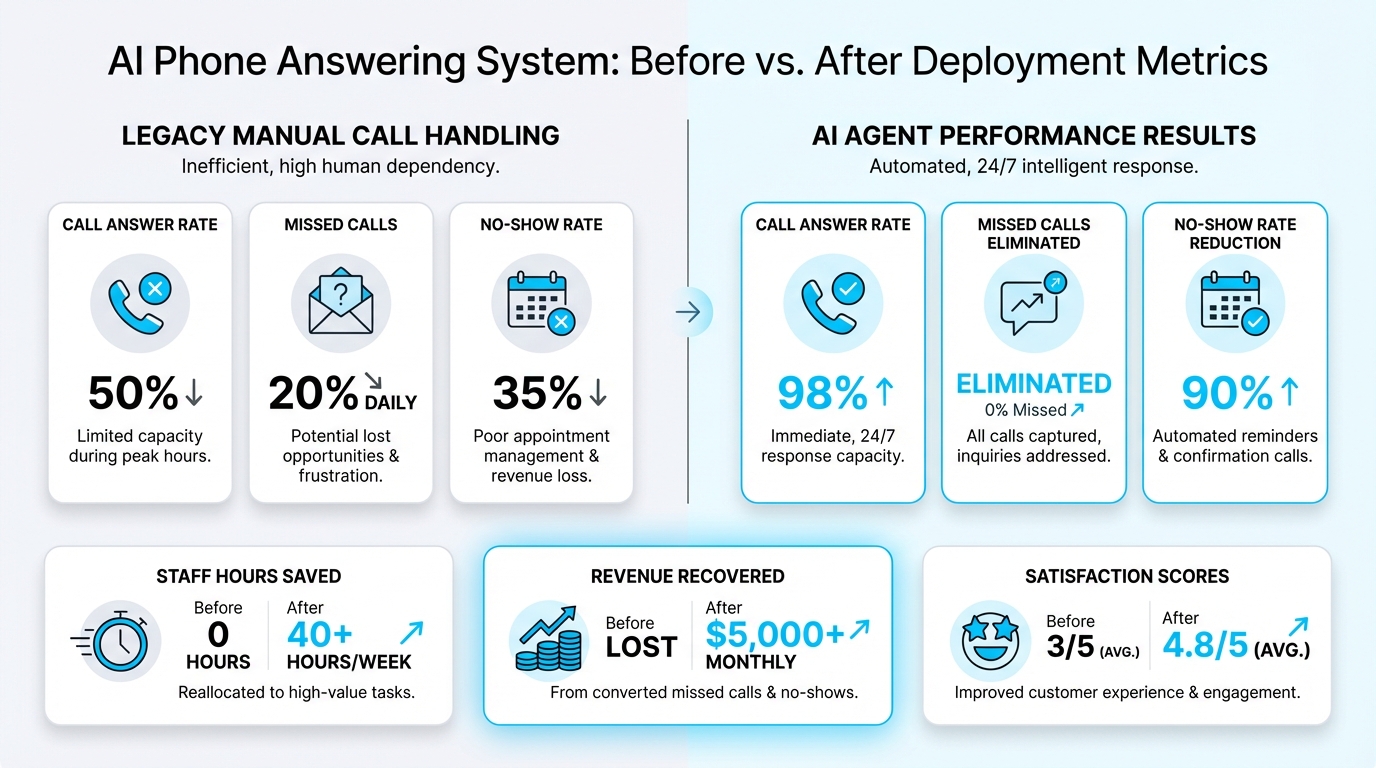
NewVoices AI agents process caller intent and take action across your business systems in under 400 milliseconds
Strip away the jargon. An inbound AI agent is a system that answers your phone, understands what the caller needs, takes action in your business systems, and does it all in a voice so natural the caller assumes they are speaking with a person.
That description sounds simple. The engineering underneath it is not.
From Sound Wave to Business Outcome in 400 Milliseconds
When a call hits a NewVoices inbound AI agent, the audio stream passes through automatic speech recognition calibrated for telephony-grade audio. Research from Marchex conversational telephone speech recognition study demonstrated that domain-specific ASR models — trained on actual customer-to-business calls, not clean studio recordings — achieved word error rates low enough to rival human transcriptionists. NewVoices builds on this foundation with natural language processing that does not just transcribe what a caller says but interprets what they mean — distinguishing between I want to cancel and I am thinking about canceling and routing each to a completely different resolution path.
The agent then acts. It pulls up the caller record in Salesforce or HubSpot. It checks appointment availability. It processes a payment through Stripe. It schedules a callback with the right sales rep and drops the transcript into the CRM before the caller hangs up. No hold music. No let me transfer you. No our systems are down right now.
Why Faster Pickup Alone Will Not Fix Your Inbound Problem
Here is the misconception that burns companies who deploy cheap AI answering tools: they assume speed is the only variable that matters. Pick up faster, problem solved.
Speed without comprehension is just a faster way to frustrate your caller.
A national home services franchise learned this after deploying a low-cost voice bot that answered every call in under two seconds. Impressive on paper. In practice, the bot could handle exactly three scenarios — schedule, reschedule, cancel. Any caller who deviated from those paths got looped back to the main menu or dumped into a voicemail box. Call abandonment actually increased by 22% in the first month because callers who reached the bot felt more frustrated than callers who waited for a human.
Quick Tip: Measure Resolution Not Speed
This is not a chatbot with a phone number. The difference between a basic voice bot and a platform like NewVoices agent platform is the difference between a vending machine and a concierge. The metric that matters is not time-to-answer. It is time-to-resolution.
The Hotel Front Desk Principle: What Hospitality Teaches Enterprise
Walk into a Four Seasons. Before you reach the desk, someone greets you by name. They already know your room preference, your checkout date, your dinner reservation. You never repeat information. You never wait. The interaction feels effortless — but behind it sits a system that pulled your profile, cross-referenced your loyalty status, and briefed the associate before you crossed the lobby.
That is what inbound AI phone answering does at scale.
When a returning customer calls a business running NewVoices, the AI agent identifies them — by phone number, by account lookup, by conversational context — within the first exchange. It greets them with their name. It references their last interaction. If they are calling about a pending order, the agent already has the tracking number ready before the caller asks for it.
Did You Know?
A B2B SaaS company with 4,200 active accounts measured the impact over 90 days: Customer effort score dropped by 41%. Upsell conversion on inbound support calls increased by 28%.
The AI agent did not just resolve issues. It recognized expansion opportunities and routed qualified signals to the account management team with full context attached.
Your competitors support centers close at 6 PM. Your AI agent just handled a contract renewal worth $50,000 at midnight — in Portuguese — while your team slept.
Before NewVoices vs. With NewVoices: A Real Deployment in Numbers
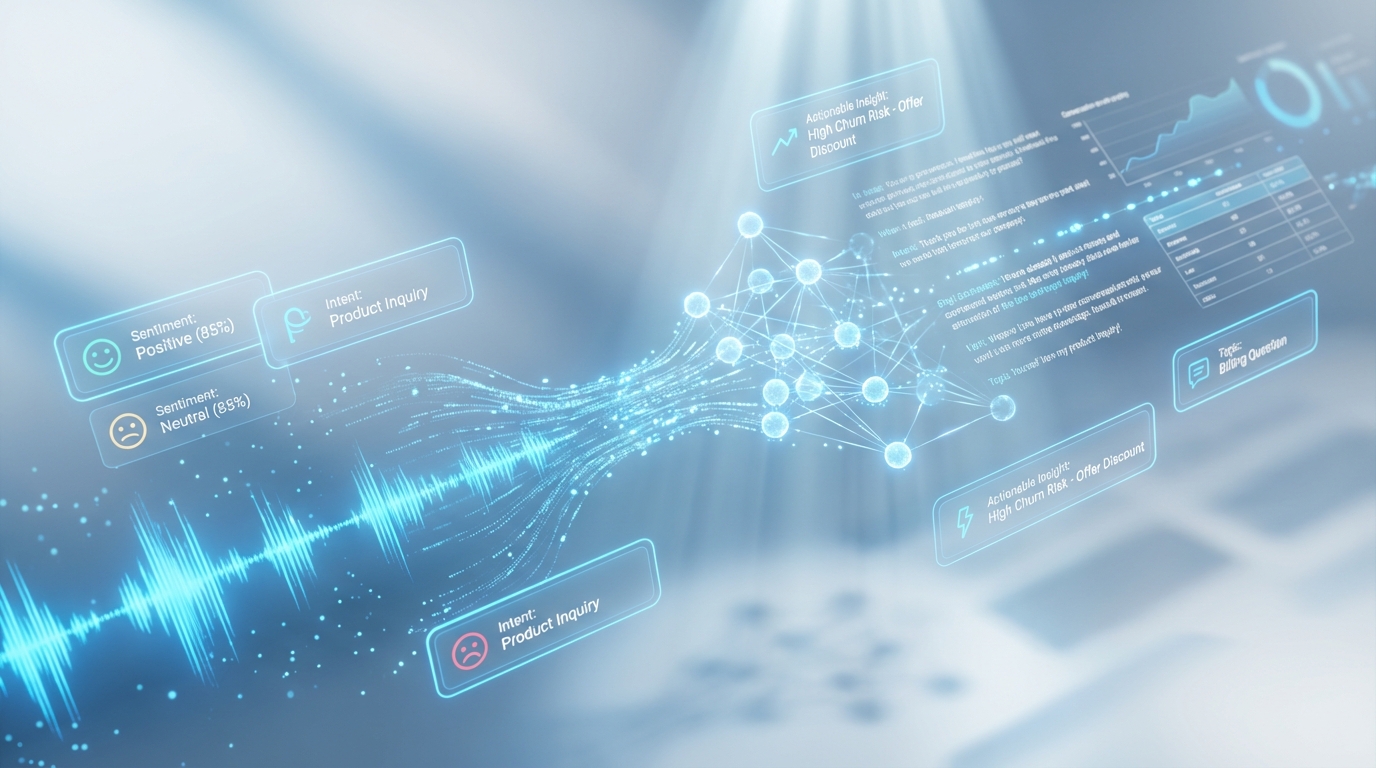
Real results from a 14-location dental practice group: 99.7% of calls answered in under 3 seconds
A multi-location dental practice group — 14 offices, 380,000 patient interactions per year — was drowning in inbound call volume. The before picture looked like this:
Calls ring. Staff scramble. Patients hold. Lines drop. Voicemails pile up. Front desk teams spend 68% of their day on the phone instead of serving patients in the office. Three full-time hires dedicated solely to returning missed calls — most of which went to voicemail again.
The after picture, 60 days into deployment with NewVoices inbound AI agents:
Every call answered in under 3 seconds. 91% of appointment scheduling handled without human involvement. No-show rates cut from 27% to 9% — aligning precisely with JAMA research showing automated telephone reminders significantly reduce missed appointments. Those three full-time callback staff? Redeployed to patient care. Monthly revenue per office increased by $34,000 from recovered appointments alone.
The practice group did not buy a phone system. They installed a revenue recovery engine that happens to answer the phone.
Join 10,000+ Businesses Already Recovering Lost Revenue
See exactly how many calls your business is missing — and calculate your recovery potential
Get Your Free Revenue Analysis
No credit card required. Results delivered in 24 hours.
The Compliance Question Nobody Asks Until It Is Too Late
Every enterprise evaluating AI voice technology should be asking one question before anything else: Does this put us on the wrong side of the FCC, TCPA, or HIPAA?
Most do not ask until an attorney calls.
The FCC 2024 declaratory ruling made the regulatory landscape unambiguous: AI-generated voices fall under the same artificial or prerecorded voice classification as traditional robocalls under the Telephone Consumer Protection Act. That means consent frameworks, opt-out mechanisms, and call recording disclosures are not optional — they are federal requirements with real enforcement teeth.
Quick Tip: Compliance Built In
NewVoices builds compliance into the agent architecture — not as an afterthought. SOC 2 Type II certification. GDPR data handling for European callers. HIPAA-compliant data minimization following HHS minimum necessary requirements.
In regulated industries — healthcare, financial services, insurance — this is not a feature. It is the prerequisite that determines whether you can deploy at all.
The We Will Just Hire More Reps Fallacy
A logistics company processing 8,500 inbound calls per week faced a familiar scaling problem. Peak hours overwhelmed their 22-person call center. Off-peak hours left half the team idle. The instinctive answer: hire 10 more agents for peak coverage.
The math told a different story.
Ten additional agents at $42,000 average salary plus benefits, training, management overhead, and workspace costs: $680,000 annually. Those agents would still take an average of 3.5 minutes to answer during true spikes. They would still call in sick. They would still quit at a 38% annual turnover rate — the industry average for contact center staff.
The Math That Changes Everything
NewVoices deployment cost: $114,000 annually. Every call answered in under 3 seconds regardless of volume. No training ramp. No turnover. No sick days. The AI handled 74% of all inbound calls to full resolution.
The 22 human agents did not lose their jobs. They stopped doing work a machine does better and started doing work only humans can do. Customer retention improved by 19% in the first quarter because the human agents — freed from routine calls — finally had time to build relationships with key accounts.
This is not automation replacing people. It is automation rescuing people from work that was wasting their talent.
Designing Your Inbound AI Agent Without Writing a Single Line of Code
The enterprise objection that kills most AI deployments is not cost or compliance. It is implementation drag.
We would need six months with our engineering team. IT has a backlog through Q3. Our telephony stack is too custom. These are real objections — and they are all based on outdated assumptions about how AI agents get built.
NewVoices no-code Agent Studio lets business operations teams — not developers — design, test, and deploy inbound AI agents. You define the call flow. You set the escalation triggers. You connect your CRM, your scheduling tool, your payment processor. You choose the voice, the language, the greeting. You test it with a live call to your own phone. The entire process — from blank canvas to live agent — takes hours, not months.
Quick Tip: Speed to Deployment
A financial services firm deployed a new AI agent for their loan status inquiry line in 11 hours. No engineering tickets. No vendor professional services engagement. No six-figure implementation fee. Hear what that sounds like — request a live demo call.
The Inbound Call Data You Are Throwing Away
Every inbound call contains intelligence your business never captures. Why did the customer actually call? What words did they use — not what category your agent logged it under, but the exact language of frustration, confusion, or intent? What did they ask about that you do not even offer yet?
Traditional call centers capture a fraction of this. An agent types a two-word disposition code — billing question — and moves to the next call. The nuance disappears.
An inbound AI agent captures everything. Full transcription. Sentiment analysis. Intent classification. Product mentions. Competitor mentions. Churn signals. Upsell triggers. Every data point, structured and searchable, fed back into your CRM and analytics stack automatically.
Real Result: $2.1 Million Recovered
A DTC subscription brand analyzing 90 days of inbound AI call data discovered that 34% of their cancellation calls were not actually cancellation intent — they were pricing objections. The AI agent was retrained to detect this pattern and offer a retention discount in real time. Save rate jumped from 8% to 41%.
The call is not just a service event. It is a data asset.
What Happens When Every Call Gets Answered: A Market You Did Not Know You Were Losing
The most dangerous metric in inbound operations is not the one on your dashboard. It is the one you have never measured: the revenue from calls that never connected.
A regional law firm tracked this for the first time after deploying an inbound AI agent. In their pre-AI state, 43% of incoming calls during business hours went to voicemail — staff were on other calls, at lunch, in consultations. After hours and weekends? One hundred percent voicemail. The firm assumed this was normal.
The Hidden Revenue
In the first 30 days with NewVoices, the AI agent answered 1,247 calls that would have previously hit voicemail. Of those, 312 were new potential clients. The agent booked 89 consultations directly into the attorneys calendars. At their average case value of $8,400, those consultations represented a pipeline of $747,600 that had been silently evaporating every single month.
Every month. For years.
This is not an edge case. NewVoices resource library documents similar patterns across healthcare, financial services, home services, and SaaS — industries where the inbound call represents the highest-intent moment in the entire customer journey. Missing that call does not just delay the interaction. It sends the caller to your competitor who picked up.
The Call Your Business Will Receive Tonight at 2 AM
Someone will call your business tonight. It will happen after your team logs off, after your call center closes, after the last agent on the late shift forwards the lines to voicemail.
That caller has a credit card ready. Or a contract question that is the only thing standing between you and a signed deal. Or a service issue that, if resolved now, keeps a $120,000-per-year account from churning to a competitor who answers at 2 AM because they deployed an AI agent six months ago.
The question is not whether inbound AI phone answering works. The data is overwhelming. The question is how many more nights of missed calls, missed revenue, and missed relationships your business absorbs before the cost of inaction exceeds every objection you have been telling yourself.
Frequently Asked Questions+
How quickly can we deploy NewVoices inbound AI agents?
Most businesses go from initial setup to live deployment in under 24 hours. Our no-code Agent Studio allows your operations team to configure call flows, integrations, and voice settings without engineering support. Complex enterprise deployments with custom CRM integrations typically complete within 1-2 weeks.
Will callers know they are speaking with an AI?
Our AI agents use natural language processing and voice synthesis that achieves human-equivalent quality in blind testing. Most callers cannot distinguish between our AI agents and your best human representatives. Compliance disclosures are configurable based on your jurisdiction requirements.
How does the AI handle complex or unusual requests?
The system includes intelligent escalation routing that recognizes when a call requires human intervention. Complex requests, emotional situations, or scenarios outside defined parameters automatically transfer to your human team with full conversation context already documented in your CRM.
Is this compliant with HIPAA, TCPA, and other regulations?
Yes. NewVoices maintains SOC 2 Type II certification, HIPAA-compliant data handling with minimum necessary requirements, GDPR compliance for European callers, and full TCPA compliance including consent management and disclosure frameworks. Compliance is built into the architecture, not bolted on.
What integrations are supported?
NewVoices integrates natively with Salesforce, HubSpot, Zendesk, Stripe, Calendly, and 50+ other business systems. Custom API integrations are available for proprietary platforms. All call data, transcripts, and action logs sync automatically to your existing tech stack.
Stop Losing Revenue While You Sleep
Every missed call is a customer choosing your competitor
Experience the AI agent that answers in 3 seconds, resolves 91% of calls, and never takes a sick day. Hear it live on your phone.
Live demo call to your phone. Not a video. Not a slide deck. The real thing.
Guaranteed results or your money back. SOC 2 certified. HIPAA compliant. Deploy in 24 hours.
Trusted By
10,000+ Businesses
Calls Handled
50M+ Monthly
Satisfaction
4.9/5 Rating